Future of Aftercare: The Letsbuild and Ziggu Integration
Ziggu-Letsbuild integration automates construction defect tracking between site management and client portals, eliminating manual updates and providing real-time transparency for developers and clients.
Follow us for more content
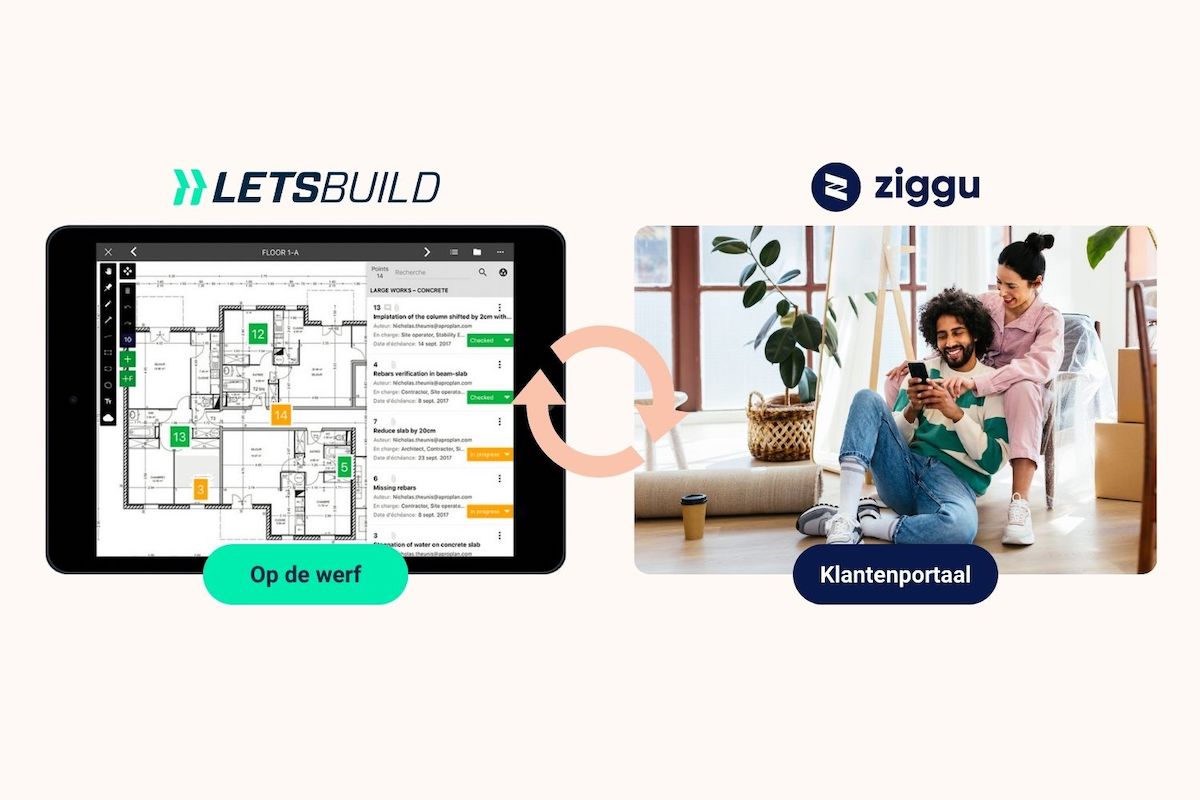
The Ziggu-Letsbuild integration transforms aftercare workflows by automatically syncing construction defect tracking between site management software and client portals, eliminating manual updates and providing real-time transparency for property developers, contractors, and clients. This seamless data flow reduces administrative overhead while improving customer satisfaction during the critical post-delivery phase.
We spoke with Mathias Nolf, project manager at Vesta Development, and Cederic Veryser, head of digital at ION Develop Different, separately. Yet the same two keywords quickly emerged in our conversations: time savings and customer experience.
They revealed why both Vesta and ION quickly adopted the integration between Letsbuild and Ziggu.
Letsbuild (also known as Aproplan) is widely-used construction site management software. One of its key functions focuses on creating site reports and preliminary handover reports.
It's at that crucial customer journey moment where this integration plays a vital role in both developers' processes. For residential developers who understand why customer experience matters, this integration becomes a competitive advantage in aftercare management.
Mathias Nolf (Vesta Development): Time Savings and Peace of Mind in Construction Aftercare
Ziggu: "Mathias, why this integration for Vesta?"
Mathias: "Time savings was the key. We were already using Letsbuild to document outstanding items during preliminary handovers, but there was still a lot of follow-up work needed afterward."
"Through Letsbuild, contractors can indicate they've resolved an item. But is our client satisfied with the result? Client managers had to contact clients repeatedly."
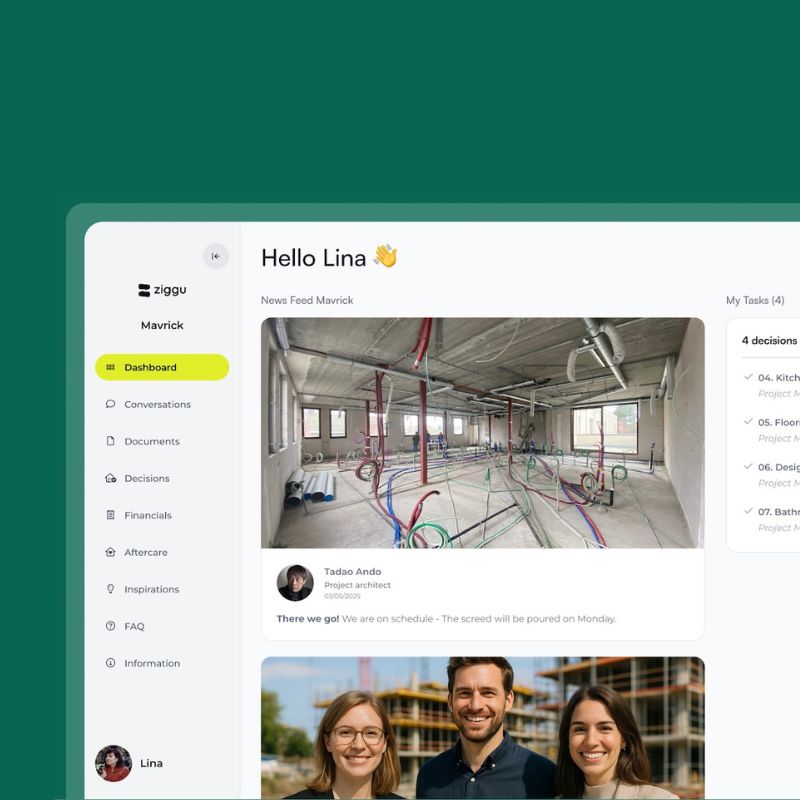
"Thanks to the integration, client, developer and contractor are always in sync. Every item added in Letsbuild automatically appears in the Ziggu client portal."
"This makes it clear for everyone which items still need attention, which have been resolved by contractors and are awaiting client approval, and which are completely finished."
"Even after handover, clients can still report an item if needed. They immediately see its status in their portal. That brings peace of mind."
Implementation Experience at Vesta
Ziggu: "How was the implementation for you?"
Mathias: "Implementation went smoothly through Stratokit, Letsbuild's integration partner. We learned from each other and could improve certain workflows on both sides."
Ziggu: "How important is digitalization for Vesta in general?"
Mathias: "We want to quickly respond to new developments that offer clear efficiency advantages. We did the same calculation for Ziggu: the platform helps our team avoid mistakes."
"The cost per unit is quickly recovered."
Cederic Veryser (ION Develop Different): Less Duplicate Work, Higher Customer Satisfaction in Aftercare
Ziggu: "Cederic, what was ION's goal with the integration?"
Cederic: "The goal was to minimize duplicate work. Previously, a client manager had to manually update every item in Ziggu based on the status in Letsbuild."
"Thanks to the integration, this information flow runs completely streamlined without their intervention."
Two Major Advantages of Integrated Aftercare
According to Cederic, there are two big advantages:
Real-time client visibility: Clients always have a real-time overview of items they've reported or that were noted during preliminary handover. They see clear descriptions, accompanying photos, and status updates.
Automated status updates: Previously, when clients requested updates on these items, client managers had to invest significant time. First searching in Ziggu for what the client reported, then checking status in Letsbuild, then summarizing this back in Ziggu for the client. Today this runs almost automatically.
"This integration is therefore a major relief for client management while bringing even more transparency for the client."
Workflow Aspect
Before Integration
After Integration
Status Updates
Manual checking across platforms
Automatic synchronization
Client Communication
Repeated phone calls and emails
Real-time portal visibility
Data Management
Multiple sources of truth
Single source of truth
Time Investment
High administrative burden
Streamlined workflows
Technical Architecture Benefits and Future Outlook
Cederic adds another advantage: "From a software architecture standpoint, I find it important that there's now a clear single source of truth. For aftercare, this is Letsbuild, and that remains possible thanks to the data flow with Ziggu."
"For ION, this is the future. Streamlined data between Letsbuild and Ziggu is a luxury you quickly get used to."
"Time savings for our people and higher customer satisfaction. The ROI of this project is unquestionable."
Both Vesta Development and ION Develop Different demonstrate how strategic technology integration transforms traditional aftercare processes. The Letsbuild-Ziggu connection eliminates manual bottlenecks while enhancing client experience. For companies managing large-scale projects more efficiently, this integration represents more than efficiency gains.
The key lies in choosing tools that work together smoothly, creating unified workflows that benefit everyone involved in the construction process. Modern client portals have become the new standard for customer engagement, making integrations like this essential for competitive aftercare service delivery.
Frequently Asked Questions
How does the Letsbuild-Ziggu integration work technically?
The integration automatically syncs data between Letsbuild's construction management platform and Ziggu's client portal through Stratokit. When contractors update item statuses in Letsbuild, these changes appear immediately in the client's Ziggu portal without manual intervention.
What are the main benefits for property developers?
Developers experience significant time savings by eliminating duplicate data entry and manual status updates. Client managers no longer need to constantly check between platforms and contact clients for updates, creating more efficient workflows.
How does this improve the client experience?
Clients gain real-time visibility into their aftercare items with clear descriptions, photos, and status updates. They can see which items need attention, which are resolved and awaiting approval, and which are completely finished, bringing peace of mind.
Is the implementation process complicated?
According to both Vesta Development and ION Develop Different, implementation runs smoothly through Stratokit. The process allows for workflow improvements on both sides and creates learning opportunities for enhanced efficiency.
What happens to existing workflows during integration?
Existing workflows are enhanced than replaced. Letsbuild remains the single source of truth for aftercare management, while Ziggu provides client-facing transparency without disrupting established processes.
Can clients still report new items after handover?
Yes, clients can continue reporting items through their Ziggu portal even after handover. These items automatically sync with Letsbuild, ensuring all stakeholders stay informed about new issues that arise.
What is the return on investment for this integration?
Both companies report that the cost per unit is quickly recovered through time savings and improved customer satisfaction. The ROI comes from reduced administrative burden and enhanced client relationships leading to better business outcomes.
Written by Vincent Van Impe
Vincent is co-founder of Ziggu, the project management software for client work, where he leads sales and marketing. Ziggu gives project-based businesses - property developers, architects, creative agencies, manufacturers and more - one place to run long, milestone-driven projects with clients and partners in the loop: milestones, tasks, decisions and approvals, and project conversations in a single dossier, paired with a client portal. With a background in architecture, project management and SaaS, Vincent writes about client experience, project delivery, and the future of project-based collaboration.