Happy employees drive happy customers — and the numbers prove it. According to a 2020 Forbes survey, 70% of executives agree that better employee experience directly improves customer experience, leading to almost two times faster revenue growth. For property developers struggling with customer satisfaction, the solution starts with investing in your own team first.
Why Employee Experience Determines Customer Satisfaction Success
Building a great customer experience journey is all the rage. After all, having a good product and fair price setting isn't enough to convince customers anymore, even in real estate.
Homebuyers expect more, so property developers go to great lengths to provide a great experience for them. But before you start moving mountains for customers, it's important to take a look at the people in your own company.
Are they having a great employee experience?
Why is this employee experience so important all of the sudden, isn't customer king, you ask? Well, sure, for every company every customer is important. But it all starts at home: if you want to boost customer satisfaction rates, you'll need to invest in your customer service team as well.
This includes: making sure they have all the resources to do their job well, giving them tools that help them automate repetitive and tedious work, and letting them feel that their work makes an impact. Understanding why customer experience matters for residential developers starts with recognizing how employee satisfaction directly affects service quality.
The EX-First Approach: Building Customer Satisfaction from Within
The role of customer advisor is known to have a high turnover. The pressure to deliver the best possible customer service in the shortest amount of time on the one hand, and often having to delicately explain surcharges or building issues to homebuyers on the other hand, makes this a stressful job.
| Traditional Approach |
Employee-First Digital Platform |
| Manual data entry across multiple systems |
Centralized platform with automated workflows |
| Reactive customer service |
Proactive communication and self-service options |
| High stress, frequent burnout |
Focused work on value-adding tasks |
| Limited customer insights |
Real-time data and customer history |
| High employee turnover |
Improved job satisfaction and retention |
But by improving your employee experience (EX) with the above-mentioned resources, you create happy staff members who will be more productive and open to changes, have a lower risk of burnout, and who will stay longer with your company.
But there's more: according to a 2020 Forbes survey, 70% of executives agree that this directly improves customer experience (CX). Which in turn — you guessed it — leads to rapid revenue growth.
In fact, according to this research, companies that prioritize EX to deliver a higher level of CX seem to achieve almost two times faster revenue growth. But only prioritizing customer experience doesn't lead to a higher employee experience or revenue growth.
In other words: EX should get your attention first.
70% of all executives agree that better EX leads to better CX
33% of all executives agree that better CX leads to better EX
Technology Solutions That Transform Employee Experience in Property Development
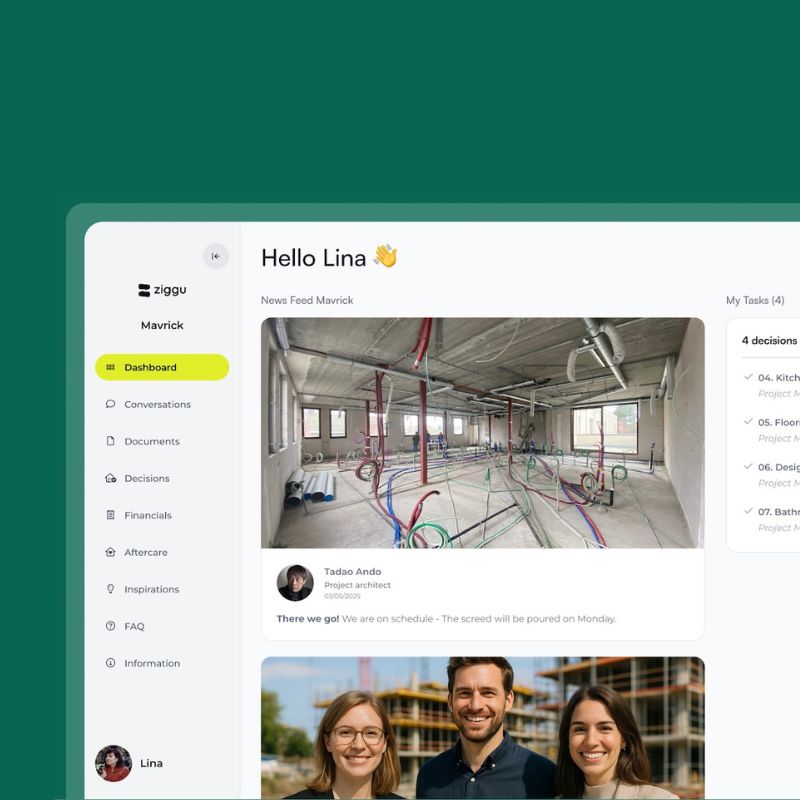
Luckily, we have technologies that help us create a better EX. By centralizing all the information on one platform (no more dozens of excel files in a dozen different folders) and automating repetitive tasks (bye-bye boredom), your team can work more efficiently and thus, focus on adding value where it actually matters.
Thanks to state-of-the-art technologies they now have the time to better inform and advise homebuyers. They have the time to listen to a customer's concerns and handle these worries like a pro. Modern solutions show how a customer portal is the new website, providing both customers and employees with the tools they need for successful interactions.
Last but not least, they get to do the job they're meant to do and enjoy it.
How to Improve Employee Experience in Property Development
Creating a better employee experience requires a systematic approach that addresses both technology and workplace culture:
- Implement centralized data management systems that eliminate time-wasting searches across multiple platforms
- Automate routine tasks like status updates and standard customer communications
- Provide real-time access to project information and customer history
- Create clear escalation procedures for complex customer issues
- Offer regular training on new tools and customer service best practices
- Establish feedback loops where employees can suggest process improvements
- Recognize and reward excellent customer service performance
These improvements don't just happen overnight. Companies that successfully transform their employee experience often start with one or two key areas and gradually expand their approach. The key is ensuring that large scale project management strategies include dedicated attention to employee tools and workflows.
From Overwhelmed Teams to Customer Satisfaction Champions
Property developers who invest in their employee experience create a ripple effect that transforms their entire customer relationship. When customer service teams have the right tools and resources, they become proactive problem-solvers instead of reactive firefighters.
The result? Customers receive faster responses, clearer communication, and solutions that actually address their concerns. This doesn't happen by accident — it happens when companies recognize that employee satisfaction and customer satisfaction are two sides of the same coin.
The 2020 Forbes research makes this connection crystal clear: companies can't fake their way to great customer experience. It starts with creating an environment where employees have what they need to succeed, feel valued for their contributions, and can focus on what matters most — helping customers achieve their dreams of homeownership.
Frequently Asked Questions
How does employee experience directly impact customer satisfaction in property development?
When employees have the right tools and feel supported, they can focus on providing better service instead of struggling with inefficient processes. Happy employees are more engaged, stay longer with the company, and develop deeper expertise that benefits customers.
What are the most important technology improvements for employee experience?
Centralized data platforms that eliminate manual searches, automated routine communications, and real-time access to project information make the biggest difference. These tools allow employees to spend more time on value-adding activities like problem-solving and customer consultation.
How long does it take to see results from employee experience improvements?
Most companies start seeing improved employee satisfaction within 3-6 months of implementing new tools and processes. Customer satisfaction improvements typically follow within 6-12 months as employees become more comfortable with new systems and can focus on service quality.
What's the biggest mistake property developers make when trying to improve customer experience?
The biggest mistake is focusing only on customer-facing changes while ignoring employee experience. Without proper tools and support, even well-intentioned customer service efforts fail because employees are overwhelmed or lack the resources to deliver on promises.
How can small property development companies afford to invest in employee experience?
Start with one key improvement area, such as centralizing customer communication or automating status updates. Many solutions scale with company size, and the productivity gains often pay for the investment within the first year through reduced turnover and improved efficiency.
What role does employee training play in improving customer satisfaction?
Training is essential but only effective when employees have the right tools to apply what they learn. The best approach combines new technology implementation with training on how to use these tools to better serve customers and solve problems proactively.
How do you measure the success of employee experience improvements?
Track both employee metrics (satisfaction scores, turnover rates, productivity measures) and customer metrics (response times, resolution rates, satisfaction scores). The most successful companies see improvements in both areas within 12 months of implementing changes.
References
Forbes Insights - The Experience Equation: How Happy Employees And Customers Accelerate Growth (2020). This comprehensive study surveyed over 300 executives across industries to understand the relationship between employee experience and customer satisfaction, providing the statistical foundation for the EX-first approach to business growth.