Updated:
August 12, 2026
The Pizzafication of the Real Estate sector
Property buyers now expect the same real-time tracking and digital transparency for their home purchases that they get when ordering pizza through mobile apps.

Property buyers now expect the same real-time tracking and digital transparency for their home purchases that they get when ordering pizza through mobile apps.


Pizzafication refers to homebuyers' expectation that they should be able to track their €300,000 property purchase with the same transparency and real-time updates they get when ordering a €15 pizza through an app.
TL;DR: Real estate innovation trends show property developers scoring -42 NPS while pizza apps excel because buyers expect digital transparency throughout their journey, not just at the sales stage.
Property developers consistently rank at the bottom of trust surveys, but the solution isn't better buildings—it's better customer experience. Our survey of 400+ homebuyers reveals why real estate disruption starts with transparency, not technology.
The Real Estate Barometer has become an annual reality check. WES Research and Bereal survey how citizens view every stakeholder in the building process.
The results? Property developers always land at the bottom.
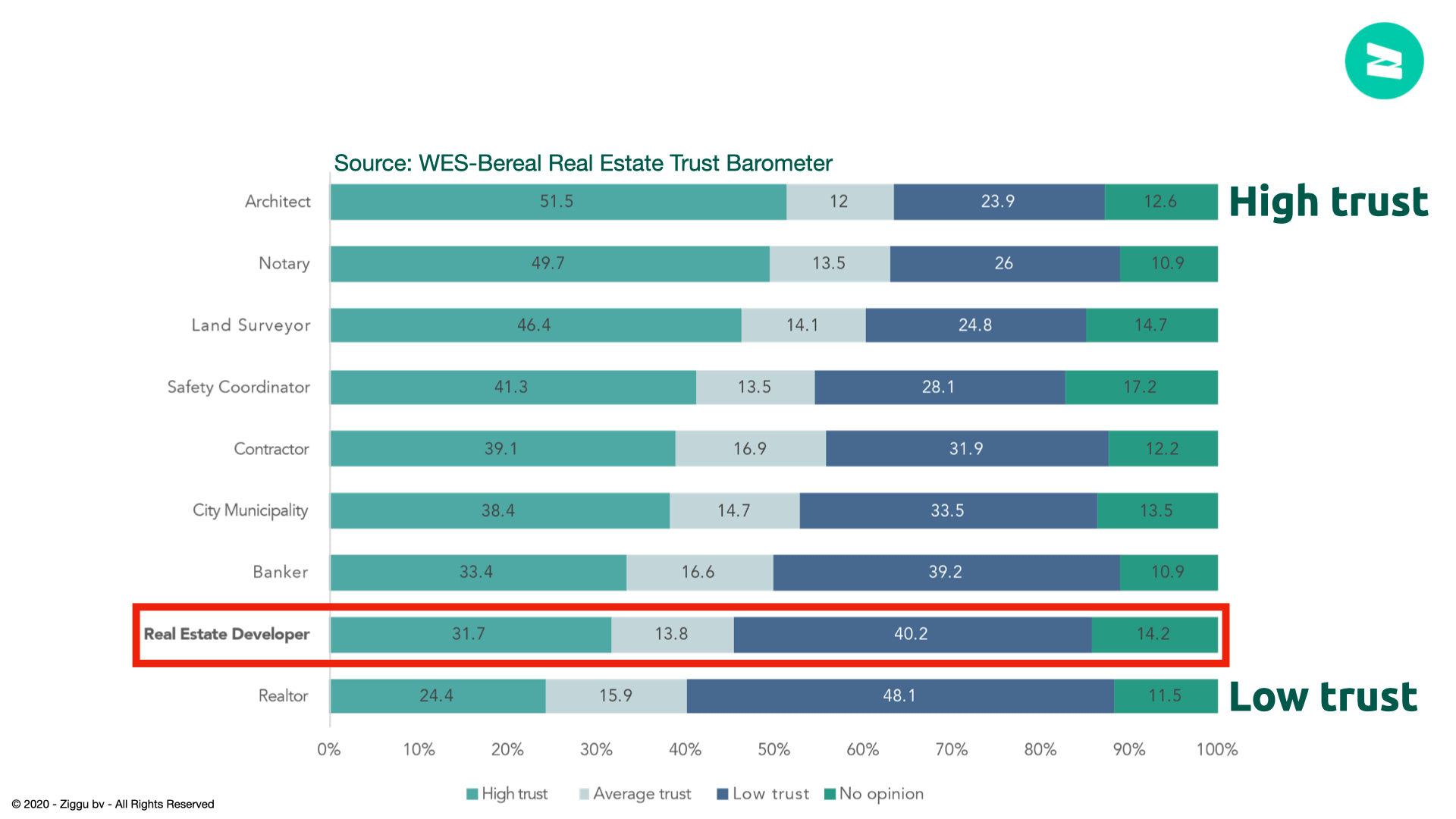
At Ziggu, we wanted to understand why. We surveyed more than 400 homebuyers who bought off-plan in projects not managed on our platform.
The findings expose exactly where property sector innovation needs to focus.
First, the Net Promoter Score. How likely were these homebuyers to recommend their developer?
Not likely at all. The score: -42.

Compare that to top brands: Netflix scores +68, Airbnb +74, Tesla +96. These companies don't just sell products—they sell experiences.
Digital experiences, mostly.
Homebuyers listed problems across every touchpoint. Promises made by sales teams got lost when projects transferred to customer service. Information dried up after contract signing. For developers looking to address these pain points, understanding why customer experience matters for residential developers becomes essential to improving trust and satisfaction.

The customer experience—or lack thereof—had the biggest impact on whether homebuyers became brand ambassadors. Not the architecture. Not the location. Not even the final product.
The journey mattered more than the destination.
| Traditional Approach | Digital Platform |
|---|---|
| Email chains and phone calls | Centralized communication hub |
| Manual status updates | Real-time progress tracking |
| Limited transparency | 24/7 access to project information |
| Fragmented customer journey | Integrated experience platform |
Here's what shocked us: only 20% of developers had any online communication environment. Most "digital" solutions were Facebook groups or Dropbox folders.

But any online environment—however basic—boosted satisfaction. Our survey showed homebuyers reported improved satisfaction when developers moved from endless email chains to centralized platforms.

Those results tell the real story behind real estate disruption. It's not about the technology—it's about transparency. Modern developers recognize that a customer portal is the new website, serving as the primary interface for ongoing customer relationships beyond initial sales.
An integrated customer journey is the new norm. Ten years ago, you could survive without a company website. Today, you're obsolete if you're not on page one of search results.
We're seeing the same trend with customer platforms. Your website becomes the facade for something bigger: a digital environment for continuous, uninterrupted customer journeys.

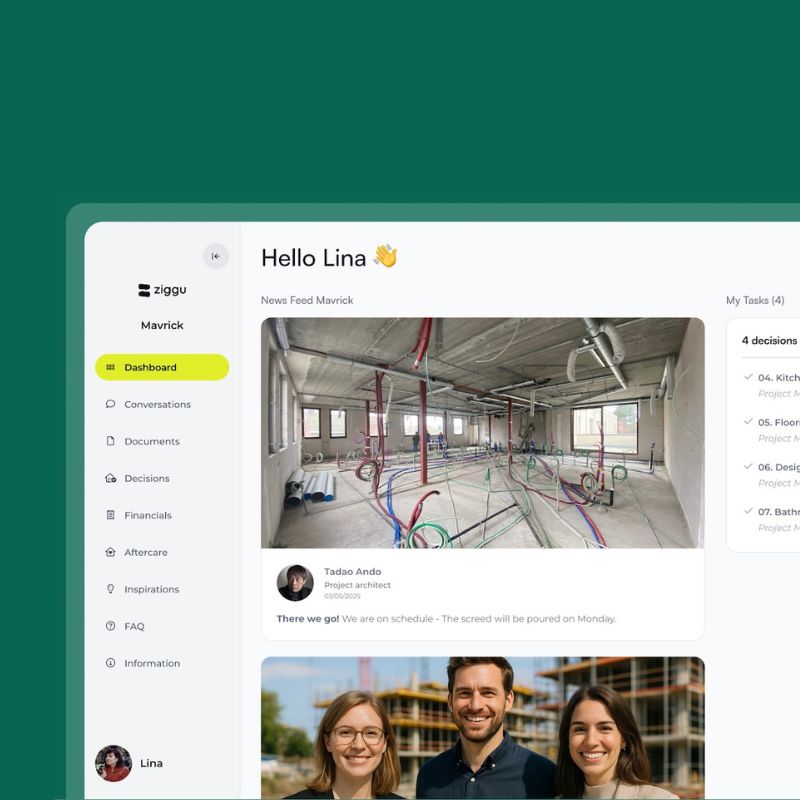
Here, homebuyers find documents, decisions, signatures, answers, and updates. A digital hub connecting all stakeholders throughout the project lifecycle.
Picture this: you're on a train that suddenly stops between stations. No announcement. No explanation.
Your stress peaks. The lack of information is the real problem.
Once the conductor announces a 10-minute delay for another train to pass, you relax. Uncertainty was the enemy, not the delay itself.
That's exactly how our homebuyers felt. Property developers fear sharing too much, especially when construction runs behind schedule. But people understand that things don't always go according to plan.
One homebuyer from our survey nailed it: "How come I can better follow up on my 15 euro pizza via an app than my house, which cost me 300,000 euros?"

This is the pizzafication of real estate. Homebuyers compare experiences across sectors. They expect pizza-level transparency for their biggest purchase.

We must go digital to meet that level of convenience—for both developers and homebuyers.
You can find detailed survey results in this post about homebuyer expectations and pain points.
The pandemic proved digital platforms aren't just nice-to-have features. At Ziggu, we saw tremendous activity increases during the first lockdown. Work continued as usual.
Digital customer journeys boost satisfaction rates and internal efficiency.
When customers digitally confirm kitchen decisions, you automate tons of work. No more Excel status updates. No more forwarding emails to suppliers. No more checking if everyone received the latest plans. These streamlined workflows represent efficient large scale project management strategies that reduce bottlenecks and improve coordination across all stakeholders.

Customer platforms keep you connected beyond project delivery. You're no longer just the company that built their house—you're the brand connected to their home.
Real estate innovation trends point to one conclusion: transparency wins over technology. Homebuyers don't need flashy features—they need clear communication.
The pizzafication of real estate isn't about apps or automation. It's about meeting basic expectations for information and involvement.
Property developers who embrace this shift will transform from industry laggards to customer champions. The tools exist. The demand is proven.
The only question remaining: will you lead the change or get left behind?
Pizzafication refers to homebuyers expecting the same level of transparency and real-time tracking for their €300,000 property purchase as they get when ordering a €15 pizza through an app. It highlights the gap between customer expectations and current real estate practices.
Our survey of 400+ homebuyers revealed that developers consistently score poorly due to poor customer experience, not product quality. Communication breaks down after contract signing, promises made by sales teams get lost, and homebuyers feel left in the dark about their biggest purchase.
Our research found that any online communication environment—even basic Facebook groups or Dropbox folders—improved homebuyer satisfaction compared to traditional email chains and phone calls. The key is centralized, transparent communication throughout the project.
Property developers scored -42 NPS in our survey, compared to top brands like Netflix (+68), Airbnb (+74), and Tesla (+96). This massive gap shows how far the real estate industry lags behind other sectors in customer experience.
Yes, digital customer journeys boost both satisfaction and internal efficiency. When customers digitally confirm decisions, it eliminates manual Excel updates, reduces email forwarding, and ensures all stakeholders have access to the latest project information automatically.
According to our survey, only 20% of property developers had any form of online communication environment for their projects. Most relied on traditional methods like email chains and phone calls, creating fragmented customer experiences.
Pizzafication represents a fundamental shift in customer expectations across all industries. Property developers who embrace transparency and digital communication will transform from industry laggards to customer champions, while those who resist will be left behind.
Vincent is co-founder of Ziggu, the project management software for client work, where he leads sales and marketing. Ziggu gives project-based businesses - property developers, architects, creative agencies, manufacturers and more - one place to run long, milestone-driven projects with clients and partners in the loop: milestones, tasks, decisions and approvals, and project conversations in a single dossier, paired with a client portal. With a background in architecture, project management and SaaS, Vincent writes about client experience, project delivery, and the future of project-based collaboration.