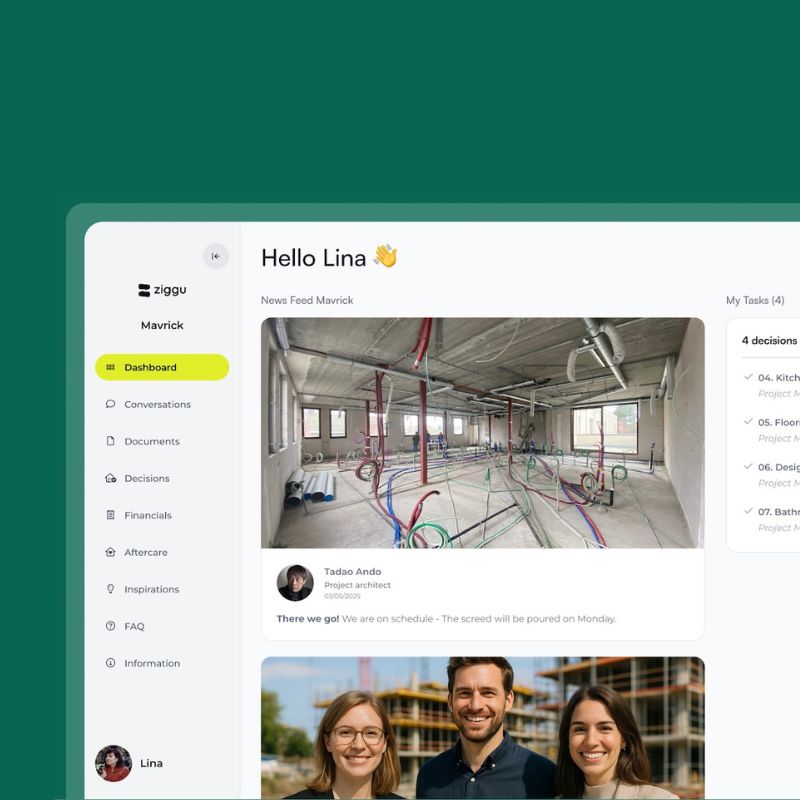
Real estate customers now compare their home-buying experience to every other service they use daily — from smartphones to pizza delivery. Property developers who ignore customer experience real estate insights risk losing buyers who expect nothing less than seamless, digital-first interactions throughout their property journey.
Key Takeaways
- Homebuyers expect smartphone-level user experience in real estate
- Customer experience gaps in property development are widening
- Digital platforms can improve developer efficiency while enhancing buyer satisfaction
- Consumer expectations now transcend industry boundaries
Why Real Estate Customer Experience Lags Behind Other Industries
Pascal Deseure was on sabbatical when opportunity knocked. The experienced customer journey specialist didn't hesitate to join Ziggu as International Sales Executive.
"I had a lot of plans during my time off," he laughs. "But as someone who has spent his career trying to give people the best customer journey in different sectors, I knew that I could put my heart and soul into selling Ziggu's customer experience platform to real estate developers."
His decision crystallized around a simple truth he'd heard years earlier at an industry event.
"I heard Ziggu's CEO Yannick Bontinckx say something I'll never forget," Pascal remembers. "He said: 'For most people, a house is the most important purchase of their lives, yet these homebuyers often get a better online experience when buying a pizza than when they buy a house'."
That statement revealed the core problem. Survey results showed people were happy with their homes but much less pleased with the after-sales service they received. Understanding why customer experience matters for residential developers becomes critical when homebuyers increasingly base purchase decisions on service quality expectations.
How Consumer Expectations Shape Real Estate CX Standards
The gap between expectation and reality in property customer experience continues widening. Pascal sees this disconnect daily in his role.
"Consumers compare the services and tools they use daily," he explains. "Even when those products have nothing to do with each other, people are still inclined to compare the experiences."
This cross-industry comparison creates new challenges. Buyers compare telecommunication company customer service to hotel chains. They expect real estate platforms to match their smartphone's user-friendliness.
"Be prepared when your homebuyers expect a tool as user-friendly as a smartphone to follow up on their home," Pascal warns. "They'll want nothing less than a smooth-sailing experience, just like their iPhone offers."
| Traditional Approach |
Digital Customer Portal |
| Phone calls and emails for updates |
Real-time project dashboard |
| Manual document sharing |
Instant access to all project files |
| Delayed response times |
24/7 information availability |
| Fragmented communication channels |
Centralized messaging system |
What Separates Mature PropTech From Startup Hype
Pascal initially worried about joining what might be "this typical scale-up" with ping pong tables and beanbags. His fears proved unfounded.
"What I quickly realized is that this is a mature, ambitious company with good people," he says. "This group works well together, whether we're sitting next to each other or miles apart."
The platform delivered on its original promise. "It does offer customer experience real estate insights at the level that homebuyers deserve," Pascal notes.
The technology enables developers to increase efficiency while freeing customer care teams to guide homebuyers properly. Better communication reduces errors and pleases buyers more — something the real estate sector desperately needs. This connects directly to how a customer portal is the new website for property developers looking to meet modern buyer expectations.
"Ziggu offers the customer experience that homebuyers deserve. Besides this, it gives you the possibility to improve the way you communicate, and decrease the margin of error."
Pascal Deseure
International Sales Executive, Ziggu
Overcoming Developer Resistance and Market Forces
Despite obvious benefits, Pascal encounters resistance. Not every company embraces customer experience transformation immediately.
"Some companies aren't there yet," he acknowledges. "I can explain the return on investment or the advantages for their team, but I can't push them."
His approach remains patient but persistent. "What I will do, is promise to call them back in a year to have another chat about the importance of customer experiences," Pascal says with a knowing smile.
Market forces will eventually compel change. As buyer expectations continue rising, developers who ignore real estate CX will face competitive disadvantages. The trajectory is clear. Customer experience standards will only intensify as consumers become more digitally sophisticated.
Pascal predicts companies will need to adapt faster than they think. "You might want me to call you back a little sooner," he tells hesitant prospects with a laugh. Many developers discover that implementing efficient large scale project management strategies becomes necessary to handle increased buyer engagement and expectations.
The message resonates across the industry. Real estate customer experience can no longer operate in isolation from broader consumer expectations.
FAQ: Real Estate Customer Experience
Why do homebuyers compare real estate experiences to other industries?
Modern consumers evaluate all their interactions through the same lens. They expect consistent quality across every service they use, regardless of industry.
What specific improvements do customer experience platforms offer developers?
Digital platforms increase operational efficiency, improve communication clarity, reduce errors, and free staff to provide better personal guidance to buyers.
How long does it take for developers to see ROI from customer experience investments?
While specific timelines vary, improvements in communication efficiency and customer satisfaction typically become apparent within the first few projects using dedicated platforms.
What happens to developers who ignore customer experience trends?
They risk losing competitive advantage as buyers increasingly choose developers who provide superior, digitally-enabled experiences throughout the buying journey.
How do buyer expectations differ across age groups?
Younger buyers expect instant digital access to all project information, while older buyers value responsive personal communication combined with user-friendly digital tools.
What role does mobile accessibility play in real estate customer experience?
Mobile-first design is essential since buyers frequently check project updates, communicate with teams, and access documents from their smartphones throughout the buying process.
The real estate industry stands at an inflection point. Customer experience real estate insights show that buyer expectations have fundamentally shifted. Developers who recognize this change and invest in proper digital platforms will thrive. Those who don't will find themselves explaining why their process feels more complicated than ordering pizza online.
Pascal's journey from sabbatical to Ziggu exemplifies this transformation. His confidence in the platform stems from its ability to bridge the gap between current real estate practices and modern consumer expectations. The question isn't whether customer experience will become standard in real estate — it's whether developers will lead or follow this inevitable change.