A client portal doesn't replace personal service—it amplifies it. By handling routine inquiries automatically, portals free your team to focus on moments that matter: complex decisions, problem-solving, and relationship building. The result? Customers get instant access to information AND meaningful human interaction when they need it most.
What Does "Personal Service" Actually Mean in 2025?
Imagine this scenario.
It's Easter weekend. Chocolate's been eaten. Calories have been ignored. And now you're checking your bank account to see if your cocoa binge matched your budget.
But wait. You can't just log in.
You have to call someone to get your balance.
Oh no... It's Sunday. Offices are closed. You tell yourself, "I'll set a reminder for Monday." (You won't.)
Maybe you'll try digging up your last balance from your email inbox. 123 results. All with the subject line "Your monthly statement." None with the actual number you need.
AAAAAAAH.
Sounds ridiculous, right? We're already so used to our banking app.
And yet this is how many "customer-oriented" companies operate today. With email. With PDFs. With phone calls.
With friction.
Why "We Don't Need a Portal" Misses the Point
When a property developer tells us:
"But we don't need a client portal, we pride ourselves on personal service"
our inner Ziggu alarms go off.
Because here's the thing: you're not offering personal service if you're forcing customers to call or email for basic info they could easily find themselves.
You're offering inconvenient service.
Today's buyers expect more. They're used to tracking everything from packages to pizza deliveries in real-time. And then they buy a home – the biggest purchase of their life – and suddenly, they're in the dark again?
Not cool.
Real personal service means being there when it matters most. For the tough questions. For the decisions that require advice, empathy or expertise.
But for everything else?
Customers want autonomy. They want a secure client portal where they can log in, see where things stand, and get peace of mind instantly — no phone call needed. This is precisely why customer experience matters for residential developers in today's competitive market.
How Does a Client Portal Actually Improve Personal Service?
Here's what great customer experience looks like in 2025:
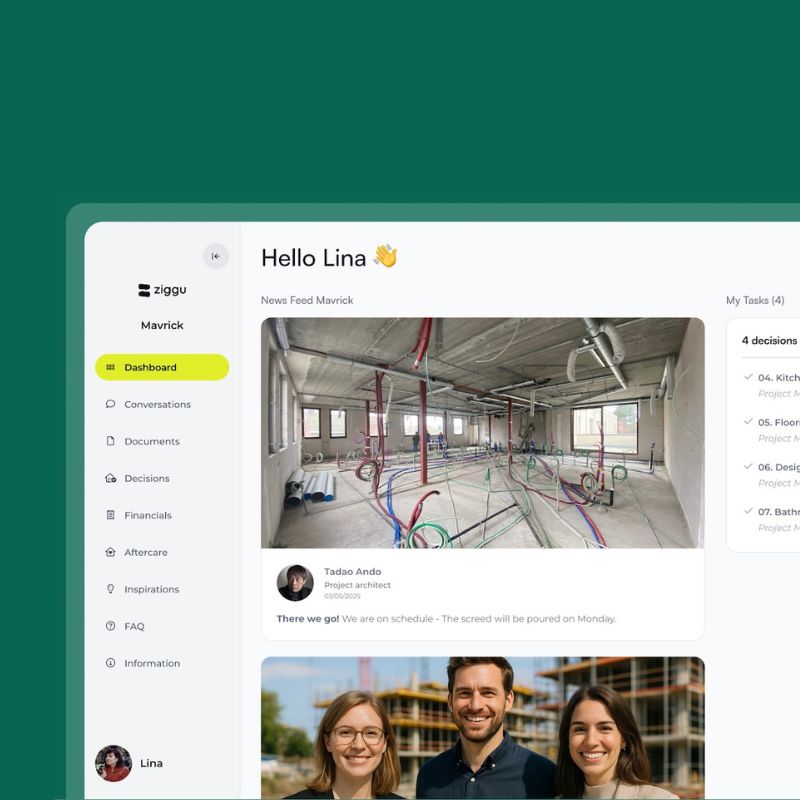
- A customer logs into their online portal to view their signed contract, track progress on the site, and see what comes next.
- They browse design decisions, approve the kitchen tiles, and get a reminder to visit the showroom, all without needing to ask.
- But then they wonder: "Can I move that wall 20 cm?" That's when they get in touch.
And that's when you step in.
Not a chatbot. Not an AI assistant that can't pronounce their name.
You. The expert who knows the context, the story, the nuance.
And because you weren't buried in back-and-forths about document versions, you've got time to respond thoughtfully.
It's what we call the AND approach:
- Self-service and human service
- Efficiency and empathy
- Tech that empowers and trust that connects
| Traditional Approach |
Digital Portal Approach |
| Phone calls for basic information |
24/7 self-service access |
| Email chains for document sharing |
Centralized document library |
| Manual status updates |
Real-time project tracking |
| Team overwhelmed with routine queries |
Team focused on complex decisions |
| Delayed responses on weekends |
Instant access to project information |
What Does Client Portal vs Personal Service Look Like in Practice?
The best customer experience? It starts behind the scenes.
Take Triple Living. Their team was growing fast, but their customer communication… not so much.
"We noticed our team had less and less time for real follow-up. Clients only heard from us when there was an invoice. Not ideal."
Since implementing Ziggu, that's changed completely.
Now, clients feel more supported, and the team?
They spend less time on admin and more time building lasting relationships.
Or look at Cooman Construct, where Gert runs the show with a lean team.
"Before Ziggu, every email thread was a jungle. Now, even if someone's out, anyone in the team can help the client instantly."
That peace of mind isn't just for clients, it's for your colleagues, too.
And then there's ION, managing multiple high-end developments at once.
"We wanted to offer a premium experience. But without structure, we couldn't scale. Ziggu helped us centralize everything, and now our whole team works more efficiently, and clients actually notice."
These success stories demonstrate exactly what happens when you manage large-scale projects more efficiently — your team gains bandwidth for meaningful client relationships.
The Future of Personal Service Is Both Digital and Human
What do these companies have in common?
They've stopped thinking of personal service as something that lives in a phone call or a nicely worded email.
They deliver it through consistency, transparency, and timing, enabled by a platform that supports both the customer journey and the people behind it.
The portal necessity isn't about replacing human connection. It's about creating space for it to happen where it counts. When your customers can check project milestones, download documents, and approve decisions on their own schedule, your team becomes available for what matters: solving problems, providing expertise, and building trust.
Understanding that a customer portal is the new website helps developers realize they're not just building homes — they're building digital experiences that extend far beyond the construction site.
The personal service myth suggests that technology and human touch are opposites. They're not.
The most successful property developers understand that digital client experience amplifies personal service than replacing it. A client portal doesn't make you less personal — it makes you more present when presence matters.
Your customers don't want to choose between convenience and connection. They want both. And with the right platform, you can deliver exactly that.
The question isn't whether you need a portal. It's whether you're ready to redefine what personal service means in an age where customers expect instant access to their information and meaningful human interaction when they need guidance.
Frequently Asked Questions
Will a client portal make my service less personal?
No, a client portal makes your service more personal by freeing your team from routine inquiries. This allows you to focus on complex decisions and relationship building where your expertise matters.
What information should customers be able to access through a portal?
Customers should have access to contracts, project timelines, design decisions, payment schedules, and progress updates. Anything they might call or email about for basic information should be available 24/7.
How does a portal improve team efficiency?
Portals eliminate repetitive email threads and phone calls about status updates. Your team spends less time on administrative tasks and more time on meaningful client interactions and problem-solving.
Do customers actually want to use self-service portals?
Yes, customers expect the same convenience they get from banking apps and package tracking. They want instant access to their project information without waiting for office hours or email responses.
How can we maintain our company culture with digital tools?
Digital tools support your culture by creating space for meaningful interactions. When routine tasks are automated, your team can focus on the human moments that build lasting relationships.
What happens if customers still prefer calling or emailing?
A good portal complements traditional communication methods than replacing them. Customers can choose their preferred method, while your team has all the context they need to provide better service.
How do we measure the success of a client portal?
Track metrics like reduction in routine inquiries, faster response times for complex questions, customer satisfaction scores, and team productivity. The goal is more meaningful interactions, not fewer total interactions.