Updated:
August 12, 2026
A customer portal is the new website
Customer portals have replaced traditional websites as the standard for property developers to demonstrate credibility and provide interactive buyer experiences.

Customer portals have replaced traditional websites as the standard for property developers to demonstrate credibility and provide interactive buyer experiences.


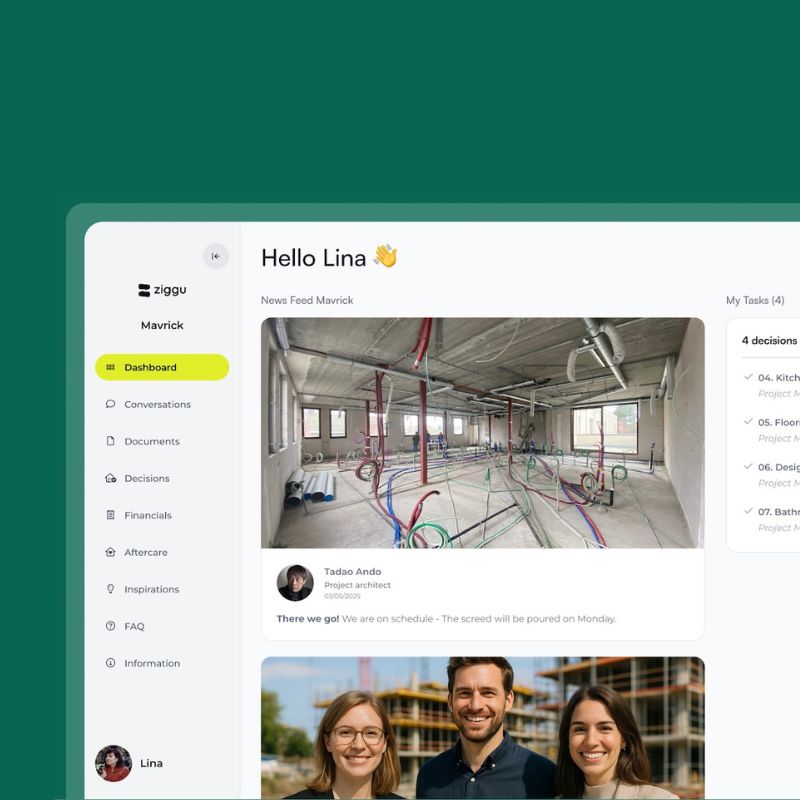
Customer portals have become the new standard for professional property developers — replacing fancy websites as the primary way to demonstrate credibility and competence to homebuyers. Modern buyers expect more than static web pages; they demand interactive, organized digital experiences that keep them informed throughout their property journey.
Ten years ago, not having a website was unthinkable. Today, the same principle applies to customer portals.
When we search for products or services, we automatically expect companies to appear in search results. If they don't show up on the first page, we question their legitimacy. We'd assume we misspelled the company name than accept they lack an online presence.
The digital market has evolved. Property developers who relied on impressive websites to showcase professionalism now face higher expectations. Homebuyers want transparency, real-time updates, and organized communication — not just marketing materials. This shift in expectations directly impacts customer experience standards for residential developers, as buyers now demand digital transparency throughout their journey.
This shift mirrors what happened with websites themselves. Companies without digital presence lost customers to competitors who embraced online platforms. Now, developers without customer portals risk the same fate.
A customer portal demonstrates three critical qualities that define professional property developers in 2025:
Implementing a customer portal shows homebuyers you understand contemporary technology and customer care standards. You don't just follow trends — you actively adopt them.
This sends a powerful message about your company culture. You adapt to change than resist it. You embrace digitalization alongside the broader industry evolution.
Homebuyers notice these details. They correlate technological sophistication with overall business competence.
Customer portals position you at the forefront of PropTech innovation. While these platforms are becoming standard, their feature possibilities remain limitless.
You can offer employees and homebuyers modern tools as they become available. Automation capabilities, communication enhancements, and project tracking features continuously evolve.
This innovation sweet spot allows you to stay ahead of competitors still relying on traditional communication methods.
Home purchases require exceptional clarity. Buyers need transparent information about payment schedules, construction progress, and project milestones.
Customer portals centralize everything in one organized location. Legal documents, architectural plans, construction updates, communication threads — all accessible through a single interface.
This organization extends beyond client experience. Your team benefits from centralized workflows and centralized information access.

"People are happy to have one spot where they can contact their advisor, check offers, ask questions, etcetera. Everyone, from the kitchen designer to the floorer, has access. That makes it easier for everyone to follow-up on construction."
This testimonial highlights the practical benefits beyond professional appearance. Customer portals create genuine operational improvements.
Team efficiency increases dramatically when information becomes centralized. Staff members waste less time searching for documents, tracking down emails, or duplicating communications. These efficiency gains become particularly important for large-scale project management, where coordinating multiple stakeholders requires sophisticated digital infrastructure.
Client continuity improves significantly. When customer advisors leave or become unavailable, replacement team members can immediately access complete project histories. No client gets left behind due to personnel changes.
| Traditional Communication | Customer Portal Approach |
|---|---|
| Scattered emails and phone calls | Centralized communication hub |
| Physical document delivery | Real-time digital document access |
| Separate contractor communication | Unified stakeholder collaboration |
| Delayed progress updates | Automated milestone notifications |
| Manual tracking systems | Organized digital workflows |
The efficiency gains compound over time. Both homebuyers and development teams experience smoother, more predictable workflows.
The property development industry has reached a tipping point. Customer portals have transitioned from competitive advantage to basic requirement.
Homebuyers now expect digital transparency throughout their purchase journey. They want immediate access to project information, communication with all stakeholders, and organized documentation systems.
Developers who continue relying on traditional communication methods appear outdated. They signal resistance to industry evolution and customer-centric thinking. The parallel with website adoption is striking. Companies that delayed website implementation eventually faced irrelevance. Customer portals represent the same inflection point for property developers.
Successful customer portal implementation requires strategic thinking beyond technology selection. User experience must feel intuitive for both technical and non-technical users. Complex interfaces discourage adoption and create support burdens.
Team integration remains critical — all stakeholders from sales representatives to construction managers need access and clear usage protocols. Content organization determines portal effectiveness. Logical document categorization and intuitive navigation paths enhance user satisfaction. These implementation considerations directly impact professional perception. Well-executed portals reinforce competence; poorly designed systems undermine credibility.
Customer portals represent more than technological advancement — they embody evolved customer relationship standards. Professional property developers recognize that modern clients demand transparency, organization, and efficient communication.
The companies that embrace this shift position themselves for sustained success. They demonstrate adaptation capabilities that extend beyond technology to customer-centric business practices. Organizations that understand these dynamics often find that removing communication bottlenecks becomes a natural outcome of portal implementation.
Just as websites became essential business infrastructure, customer portals now define professional development standards. The question isn't whether to implement a portal — it's how quickly you can establish this new foundation for client relationships.
The customer portal has indeed become the new website. Forward-thinking developers understand this evolution and act accordingly.
Customer portals provide interactive, personalized experiences while websites offer static information. Portals enable real-time communication, document sharing, and project tracking for specific clients. They create ongoing relationships than one-time visits.
Implementation timelines vary based on customization requirements and team integration needs. Most professional platforms can be deployed within weeks with proper planning. The key is ensuring all stakeholders understand usage protocols before launch.
Modern homebuyers expect digital access throughout their purchase journey. They actively engage with portals for document access, construction updates, and communication with development teams. Usage increases when portals are well-designed and provide genuine value.
Change management requires clear training and demonstrated benefits for all stakeholders. Staff adoption improves when portals reduce administrative burdens and improve workflow efficiency. Leadership support and proper implementation protocols ensure successful transitions.
Customer portals provide competitive advantages regardless of company size. Small developers can differentiate themselves from larger competitors through superior digital experiences. The efficiency gains often justify implementation costs within months.
Organized digital experiences typically improve client satisfaction through transparency and communication efficiency. Clients appreciate centralized information access and real-time project updates. The result is stronger relationships and reduced support requests.
Professional portals include enterprise-grade security features for sensitive project information. Document access controls, encrypted communications, and audit trails protect both developer and client interests. Security becomes a competitive advantage than a concern.
Vincent is co-founder of Ziggu, the project management software for client work, where he leads sales and marketing. Ziggu gives project-based businesses - property developers, architects, creative agencies, manufacturers and more - one place to run long, milestone-driven projects with clients and partners in the loop: milestones, tasks, decisions and approvals, and project conversations in a single dossier, paired with a client portal. With a background in architecture, project management and SaaS, Vincent writes about client experience, project delivery, and the future of project-based collaboration.