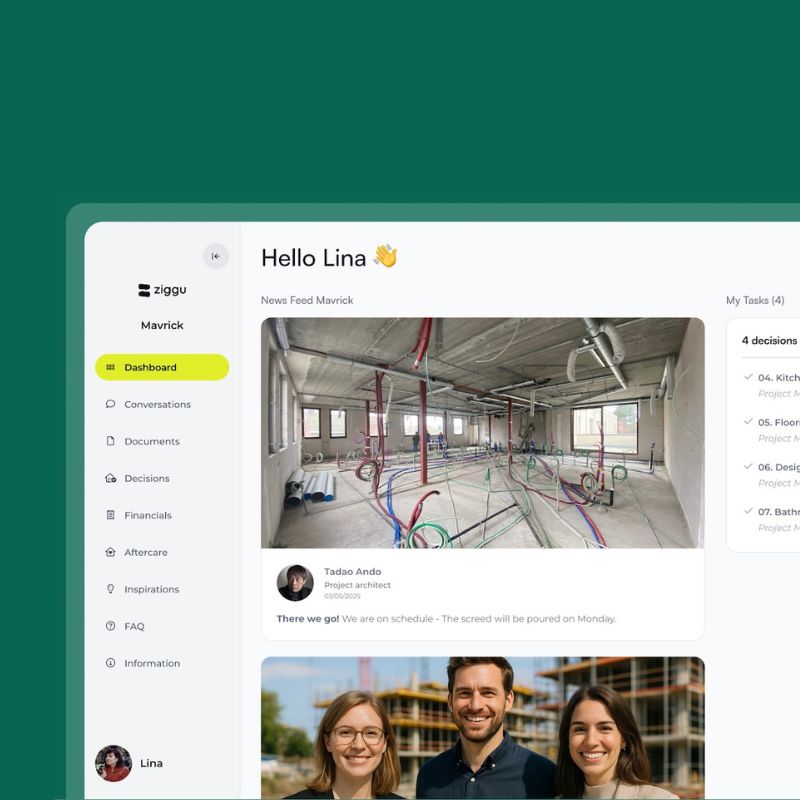
Proactive client communication eliminates complaints by providing regular updates to homebuyers, preventing anxiety-driven questions and creating genuine satisfaction instead of overwhelming customer service teams.
Follow us for more content
Proactive client communication doesn't flood developers with complaints — it eliminates them. When property developers share clear, regular updates with homebuyers, they prevent the anxiety-driven questions that overwhelm customer service teams and create genuine client satisfaction.
The Pandora's Box Myth in Real Estate Communication
"But won't we open Pandora's box when we communicate so often with homebuyers?" This question surfaces in nearly every conversation we have with residential developers about implementing proactive client communication systems.
The fear is understandable but misguided. Developers worry that clear communication channels invite more complaints. The opposite happens.
Picture yourself on a train that suddenly stops between stations. No announcement. No explanation. You peer out windows, check your phone, maybe feel your pulse quicken. Then the conductor's voice crackles over the intercom: "We're holding for an oncoming express train. Five-minute delay." Instant relief.
That's homebuyer psychology in action. Information eliminates anxiety. Silence breeds speculation.
When clients can't access project updates, they create their own narratives. Usually negative ones. They'll email about delivery dates you've already communicated. Call about documents you've sent twice. Text about budget changes that haven't happened.
Your customer service team becomes a reactive firefighting squad instead of strategic advisors. This is precisely why customer experience matters for residential developers — poor communication patterns directly impact project success and client relationships.
How Proactive Client Communication Filters Small from Big Questions
Centralized communication transforms client relationships from reactive to strategic. When homebuyers access documents, updates, and project information through a dedicated platform, they self-serve on routine inquiries.
Legal documents live in one place. Construction photos update weekly. Budget breakdowns stay current. Floor plans remain accessible.
The result? Clients stop calling about bathroom dimensions from emails sent months ago. They stop asking for invoices you've already shared. They stop wondering if their kitchen appliance selection got approved.
Traditional Communication
Digital Portal Approach
Email chains for document sharing
Centralized document library
Phone calls for project updates
Automated progress notifications
Manual status inquiries
Real-time milestone tracking
Reactive problem solving
Proactive issue prevention
Your customer advisors finally have time for high-value conversations. Interior design consultations. Upgrade discussions. Timeline concerns that require genuine expertise.
Small questions disappear. Big questions get proper attention. Digital client portals have become the new standard for client engagement, replacing traditional communication methods with transparent, accessible information sharing.
Higher Satisfaction Through Strategic Communication at BESIX RED
BESIX RED's real estate developer Damien Janssens de Bisthoven feared that same Pandora's box. His experience tells a different story.
"The more efficiently you communicate, the easier it is to build your project"
Damien Janssens de Bisthoven Real Estate Developer at Besix RED
"Our digital platform gathers all questions, comments, and documents for and about our clients. This helps us save a lot of time managing questions, especially compared to before, when we were using our email inboxes," he explains.
The efficiency gains extend beyond time savings. "We have learned that the more efficiently you communicate, the easier it is to build your project and, in the end, the higher the client satisfaction."
Proactive updates create predictability. Construction progress photos show tangible advancement. Timeline updates prevent speculation. Budget communications maintain trust.
When clients understand what's happening and why, satisfaction increases naturally.
Building Your Proactive Communication Strategy with Client Portals
Effective proactive client communication requires systematic information sharing beyond basic documentation. Construction site photos demonstrate progress. Weather delay explanations maintain transparency. Subcontractor schedule updates set realistic expectations.
The key lies in anticipating client concerns before they surface. Regular milestone updates prevent timeline anxiety. Budget tracking communications eliminate financial surprises. Approval status notifications keep decisions moving. Modern project management strategies integrate these communication elements to prevent bottlenecks and maintain project momentum.
Essential Proactive Communication Elements:
Weekly construction progress photos
Monthly timeline updates with explanations for any changes
Immediate notification of approval decisions
Proactive weather or permit delay communications
Regular financial milestone confirmations
This approach transforms client relationships from adversarial to collaborative. Instead of demanding information, clients receive it automatically. Instead of questioning decisions, they understand the reasoning behind them.
Customer service teams evolve from reactive responders to strategic partners. They spend time on complex design discussions than document retrieval. They handle genuine concerns than information requests.
Ziggu's client communication platform helps developers implement these strategies effectively, providing the infrastructure needed for transparent, proactive client engagement throughout the construction process.
The mythical Pandora's box remains firmly closed when you control the narrative through proactive communication. Clear, consistent updates prevent the anxiety-driven inquiries that overwhelm development teams and frustrate homebuyers.
Your clients want certainty, not chaos. Give them information before they ask for it. Share progress before they wonder about it. Explain decisions before they question them.
The result isn't more complaints — it's genuine partnership between developers and homebuyers built on transparency and trust.
Frequently Asked Questions
Does proactive communication increase customer complaints?
No, proactive communication reduces complaints by addressing concerns before they escalate. When clients receive regular updates and have access to project information, they ask fewer questions and express higher satisfaction with the development process.
How often should developers communicate with homebuyers during construction?
Weekly construction progress updates work well for most projects, with immediate notifications for major milestones or delays. Monthly comprehensive reports should include timeline updates, budget confirmations, and upcoming decision points.
What information should be included in proactive client updates?
Essential updates include construction progress photos, timeline changes with explanations, approval status notifications, budget milestone confirmations, and weather or permit delay communications. The goal is anticipating client concerns before they surface.
How does a client portal differ from email communication?
Client portals centralize all project information in one accessible location, while email creates scattered communication chains. Portals allow clients to self-serve on routine inquiries and provide customer service teams with complete interaction histories.
What are the main benefits for customer service teams?
Customer service teams spend less time on document retrieval and basic status inquiries, allowing them to focus on high-value consultations like design decisions and complex problem-solving. This improves both efficiency and job satisfaction.
How quickly do developers see results from proactive communication?
Most developers notice reduced routine inquiries within 2-4 weeks of implementing proactive updates. Client satisfaction improvements typically become apparent after the first major milestone communication cycle.
Can proactive communication prevent all client complaints?
While proactive communication significantly reduces complaints, it cannot eliminate all issues. However, it transforms the nature of client interactions from reactive problem-solving to collaborative project management, making remaining concerns easier to resolve.
Ready to transform your client communication strategy? We're here to help you build proactive relationships that benefit everyone involved. Contact us today.
Written by Vincent Van Impe
Vincent is co-founder of Ziggu, the project management software for client work, where he leads sales and marketing. Ziggu gives project-based businesses - property developers, architects, creative agencies, manufacturers and more - one place to run long, milestone-driven projects with clients and partners in the loop: milestones, tasks, decisions and approvals, and project conversations in a single dossier, paired with a client portal. With a background in architecture, project management and SaaS, Vincent writes about client experience, project delivery, and the future of project-based collaboration.