PropTech platforms are transforming real estate communication by replacing fragmented email chains and scattered documents with centralized digital workspaces. In 2025, property developers and construction teams use these platforms to manage complex projects more efficiently while delivering transparent client experiences. The shift from traditional tools to structured PropTech solutions is no longer optional—it's essential for competitive project management.
For decades, the real estate sector earned a reputation for resisting technological change. Processes relied heavily on email threads, spreadsheets, phone calls, and scattered documents. While these tools functioned in simpler times, they create mounting complexity as projects grow larger and stakeholder networks expand. That mindset is shifting rapidly across the industry.
PropTech Definition and Core Communication Transformation Benefits
PropTech (Property Technology) refers to digital solutions that improve how real estate is designed, developed, sold, rented, and managed. PropTech platforms address the communication chaos that plagues traditional real estate projects by replacing fragmented workflows with structured digital environments.
These platforms help real estate professionals manage project communication, organize documents and contracts, track approvals and decisions, keep buyers informed, and reduce administrative work across multiple developments. The result is clearer communication, fewer mistakes, and better experiences for everyone involved.
| Traditional Method |
PropTech Solution |
| Email chains for decisions |
Structured approval workflows |
| Scattered document storage |
Centralized document management |
| Phone calls for updates |
Real-time project dashboards |
| Manual status reporting |
Automated progress notifications |
| Fragmented team communication |
Unified communication hubs |
When multiple units, stakeholders, and decisions intersect, fragmented communication becomes unmanageable quickly. Structured communication platforms solve this by centralizing all project information in one accessible location. Teams manage updates, documents, and approvals without juggling scattered tools.
Critical Communication Problems Driving PropTech Adoption in Real Estate
Large real estate projects involve extensive stakeholder networks: property developers, architects, contractors, buyers, suppliers, and technical partners. Traditional communication methods create predictable problems that compromise project efficiency and client satisfaction.
The most common issues include critical decisions getting buried in email threads, teams struggling to locate current documents, clients repeatedly requesting project updates, and new team members lacking project history visibility. These communication breakdowns become exponentially worse as project complexity increases.
Modern buyers and stakeholders expect transparency beyond traditional real estate communication methods. They want project updates, document access, and progress visibility without constantly contacting project teams. Digital property development platforms provide dedicated environments where clients can follow project progress, review plans and documents, approve decisions digitally, and communicate with teams in structured ways.
This creates professional, transparent client experiences while reducing repetitive questions and manual follow-up for project teams. The shift addresses a critical industry challenge—traditional real estate communication often leaves clients feeling disconnected from their investments, directly impacting satisfaction and project success rates. For developers looking to build stronger relationships, understanding why customer experience matters for residential developers becomes paramount to project success.
Ziggu PropTech Platform: Complete Construction Project Management Solution
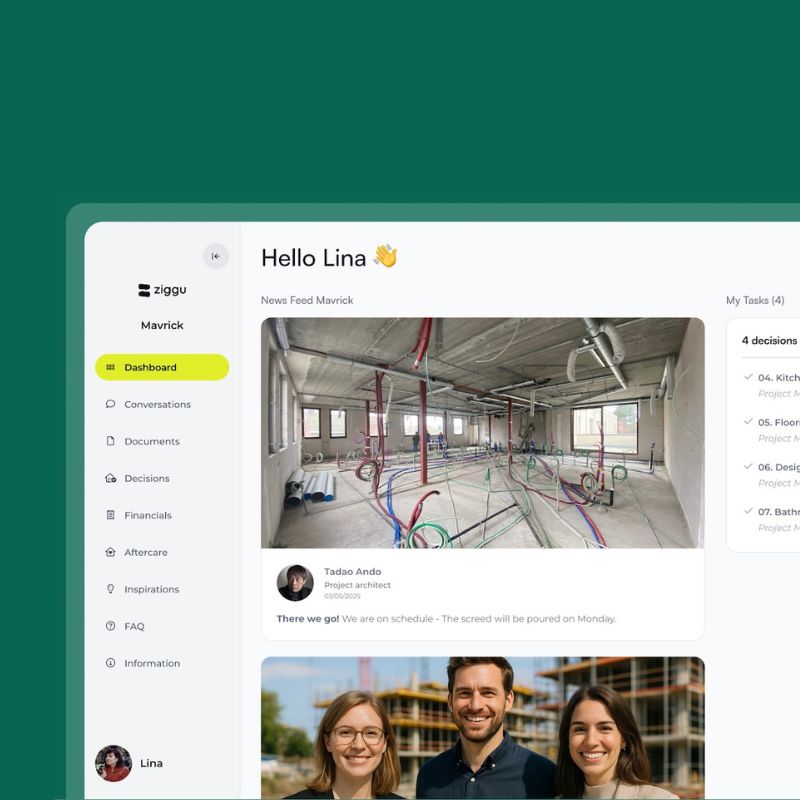
Ziggu exemplifies PropTech advancement as a collaboration platform designed specifically for project-driven companies including property developers, architects, and contractors. The platform centralizes project communication, documents, and approvals in one shared environment. Instead of managing conversations across email, messaging apps, and spreadsheets, teams work from a single structured workspace.
Core capabilities include Documents for centralized file management and version control, Conversations as unified communication hubs for clients and teams, Decisions & Approvals through digital approval workflows and decision tracking, Tasks for project task management and assignment, Milestones providing clear project timelines and progress tracking, and News Updates for structured client communication.
This approach provides teams and clients with constant project visibility, reducing miscommunication and administrative overhead. Companies implementing PropTech platforms like Ziggu report significant operational improvements. Teams implementing these strategies can manage large-scale projects more efficiently without increasing staff, while client satisfaction improves through better transparency and communication. The platform serves over 2000+ companies and maintains a 68 Net Promoter Score, reflecting strong user satisfaction with digital property development tools.
PropTech Market Growth and Digital Luxembourg Recognition
PropTech adoption accelerates as real estate companies recognize digital tools as business necessities than optional upgrades. Many companies are transitioning from fragmented tools to integrated digital platforms. As projects become more complex and teams manage multiple developments simultaneously, demand for structured collaboration tools continues growing.
The transformation isn't about replacing real estate expertise. Instead, technology supports teams by removing administrative friction and making collaboration smoother. This shift represents a fundamental change in how the industry approaches project management and client relationships. Modern property development increasingly recognizes that a customer portal is the new website for client engagement.
Ziggu was highlighted as a key solution contributing to the evolving PropTech ecosystem in the Digital Luxembourg: What the Tech?! series. The feature recognizes how PropTech platforms drive advancement in real estate communication and project management, positioning Luxembourg as a hub for property technology development.
👉 https://new-initiatives.public.lu/stories/what-tech-4-proptech
Future of Digital Property Development and Competitive Positioning
Real estate projects involve numerous moving parts, and communication complexity increases as companies scale operations. PropTech platforms address these challenges by providing structured communication, centralized documents, and enhanced client transparency. For property developers, architects, and construction teams, adopting PropTech represents more than advancement—it's about operational efficiency and professional client service delivery.
The industry's digital transformation continues reshaping how real estate projects are managed and experienced. Companies that embrace PropTech platforms position themselves for sustainable growth in an increasingly competitive market. As construction project management becomes more complex, structured digital solutions become essential tools for success.
The competitive advantage extends beyond internal efficiency gains. PropTech platforms fundamentally change how clients experience real estate projects, creating differentiation opportunities for forward-thinking companies. Organizations that master digital collaboration tools can handle larger project portfolios while maintaining higher client satisfaction standards, establishing clear market advantages over competitors still relying on traditional communication methods.
Frequently Asked Questions
What is PropTech and how does it differ from traditional real estate tools?
PropTech (Property Technology) refers to digital solutions that improve how real estate is designed, developed, sold, rented, and managed. Unlike traditional tools that rely on scattered email chains, phone calls, and spreadsheets, PropTech platforms provide centralized digital workspaces where all project communication, documents, and approvals are managed in one location.
How do PropTech platforms improve client satisfaction in real estate projects?
PropTech platforms create transparent client experiences by providing dedicated environments where buyers can follow project progress, review plans and documents, and communicate with teams in structured ways. This reduces repetitive questions for project teams while keeping clients informed and engaged throughout the development process.
What are the main communication problems that PropTech platforms solve?
The most common issues include critical decisions getting buried in email threads, teams struggling to locate current documents, clients repeatedly requesting project updates, and new team members lacking project history visibility. PropTech platforms centralize all information in one accessible location to eliminate these fragmented communication problems.
Can PropTech platforms handle multiple projects simultaneously?
Yes, PropTech platforms are designed to manage multiple developments simultaneously without increasing administrative overhead. Teams can track progress across various projects, maintain separate client communications, and organize documents for each development within a single platform environment.
What specific features should property developers look for in a PropTech platform?
Key features include centralized document management with version control, unified communication hubs for clients and teams, digital approval workflows, project task management and assignment capabilities, milestone tracking with progress visibility, and structured client update systems. These features should work together to create a comprehensive project management environment.
How quickly can teams see results after implementing a PropTech platform?
Teams typically experience immediate improvements in communication clarity and document organization once the platform is implemented. Longer-term benefits include reduced administrative work, improved client satisfaction, and the ability to manage more projects without increasing staff, though full adoption may take several weeks depending on team size and project complexity.
Are PropTech platforms suitable for small property development companies?
PropTech platforms benefit companies of all sizes by reducing administrative overhead and improving professional client service delivery. Small developers can particularly benefit from the ability to provide transparent, structured communication that competitors using traditional methods may lack, creating competitive advantages in client relationships and project management efficiency.

.png)