Construction companies should focus on making client interactions effortless rather than creating wow moments, as smooth communication and progress tracking builds stronger customer loyalty.
Follow us for more content
The construction industry can learn from "The Effortless Experience": customer loyalty comes not from overwhelming wow moments, but from making every interaction effortless. When clients can easily find information, track progress, and communicate without friction, they become advocates instead of adversaries.
What is the Effortless Experience?
Let's be clear: at Ziggu we're big fans of wow moments. In fact, we build daily towards client experiences that trigger wows and hallelujahs — from groundbreaking to handover. A photo of freshly installed windows? Wow. An update without the client having to ask? Double wow.
But in this blog we dive into a book that deliberately swims against that current: The Effortless Experience by Matthew Dixon, Nick Toman and Rick Delisi. The central thesis?
"Customers stay loyal, not because they're dazzled... but because it was easy."
Exactly.
And for those thinking: "That might apply to telecom providers, but not our sector" — think again. Even for those building, renovating, managing or selling homes, there are golden insights here. Especially if you prefer turning clients into ambassadors than agitators. This approach is particularly important for residential developers who understand the critical role of customer experience in building long-term success.
One of the most shocking statistics from the book?
"94% of customers who had a low-effort experience said they would buy again. For high-effort experiences? Only 4%. 😬"
So you might deliver a perfectly finished kitchen — but if the customer got lost along the way between five inboxes, three plan versions and one missing contractor, chances are slim he'll sing your praises.
Instead of running harder for more service, the book suggests doing something counterintuitive: make it less difficult. Or as we say in construction: less hassle = fewer broken tiles and less broken trust.
Concretely, this means:
Ensure your client can find his info himself (without having to call Sherlock Holmes first).
Don't make him repeatedly explain who he is and what's happening.
Avoid endless email threads where you yourself have to scroll to remember "what was this about again?"
Sounds simple. It's not. But it is achievable.
Customers want info easily, quickly and accessible
What does 'effortless experience' mean in a sector where nothing is ever effortless?
Let's be honest: there's little effortless about construction. Except making mistakes — that happens surprisingly fast.
But that's precisely why it's important not to make the customer search for updates, documents or deadlines on top of everything else. The average buyer barely knows what "EPB" actually means, let alone how to keep track of all the calculations being forwarded.
And yet we often expect that customer to "just send a quick email" when he can't find something.
What the book teaches us: the less energy your customer has to invest in communication, the more energy he has left to be satisfied. And that pays back in trust, loyalty and — yes — recommendations.
"Answer the next question", the authors say. Don't just answer what the customer is asking now, but anticipate the question that comes next.
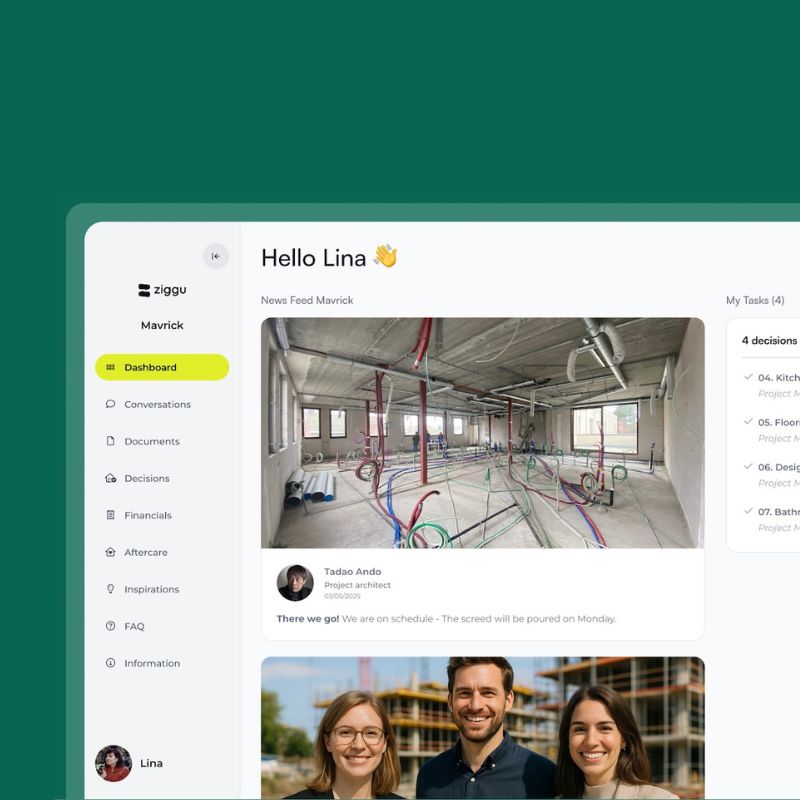
And that's exactly what smart project companies do: Send an update before someone asks for it. Share a document before it's missed. simplify a decision process so nobody doubts the latest version.
Traditional Communication
Effortless Communication
Client emails to request updates
Proactive updates sent automatically
Documents scattered across platforms
Centralized document repository
Multiple contacts for different issues
Single point of contact system
Reactive problem solving
Anticipatory issue prevention
Bonus: Avoiding friction also wins efficiency
What we've long seen ourselves is confirmed in the book with numbers: a low "customer effort score" (yes, that exists) doesn't just create more satisfied customers — but also more productive teams.
Fewer questions = fewer phone calls = fewer post-its on your colleague's screen = less stress = more space to build the relationship.
It's the perfect use for project-driven companies: property developers, architects, interior builders, contractors... Those managing many projects simultaneously with limited time and people don't benefit from "doing more" — but from better structuring. And yes, that means: making information and communication as clear and central as possible.
As one customer aptly put it:
"I can now guide twice as many clients... with the same team." (and without anyone working overtime on Sunday evening with laptop on lap)
This efficiency gain is particularly relevant for companies looking to manage large-scale projects more efficiently, where reducing customer effort directly translates to improved team productivity.
Don't forget those little wow moments
High-effort vs low-effort workflows in construction
The difference between exhausting and effortless customer experiences often lies in the details. Here's what separates the two:
High-effort experience: Client receives scattered updates via email, WhatsApp, and phone calls. Documents arrive in different versions with unclear naming. Progress photos get lost in message threads. Questions bounce between multiple team members before reaching the right person.
Low-effort experience: All project information lives in one central location. Updates arrive proactively with context. Documents have clear version control. The client knows exactly who to contact for what question.
The transformation isn't just about technology — it's about designing workflows that anticipate friction points before they frustrate customers.
Practical steps for an effortless experience in construction
So how do you actually implement effortless principles on your construction projects?
Start with information architecture. Map out every document, update, and decision point your customer encounters. Then ask: "Could someone find this at 2 AM without calling us?"
Automate the predictable. Weekly progress photos, milestone notifications, payment reminders — these shouldn't require manual effort from your team every single time.
Design for the anxious customer. Construction projects create anxiety. Combat that with transparency, not just when things go wrong, but especially when they go right.
Test your own process. Have someone outside your team try to find last month's meeting minutes or next week's delivery schedule. Time how long it takes. Cringe. Then fix it.
Measure customer effort in construction projects. You can't improve what you don't measure. But measuring "effort" in construction isn't just about satisfaction scores — it's about friction points. Count how many touchpoints a typical question requires before resolution. Track how often clients ask for information that should be readily available. Monitor response times for standard requests. The goal isn't perfection — it's reduction. Every eliminated step, every prevented confusion, every proactive answer builds toward that magical "this was actually easy" moment.
Modern construction companies are discovering that a customer portal has become the new website — a central hub where clients can access everything they need without creating additional work for the project team.
Conclusion: Effortless ≠ uninspired
Perhaps one nuance before we close: effortless doesn't mean you shouldn't provide an experience anymore. It just means you shouldn't burden your customers with complexity.
That construction site photo, that friendly message, that proactive update — keep those by all means. But use them as hooks to bring clarity, not as band-aids on a chaotic process.
And remember: loyalty doesn't come from a chocolate at key handover. It comes from a customer who says throughout the entire journey: "That was actually easy."
Because in an industry where Murphy's Law operates at full capacity, being the company that makes things feel effortless isn't just good service — it's competitive advantage.
The effortless experience in construction isn't about eliminating all challenges. It's about eliminating unnecessary ones, so your clients can focus on the excitement of their new space than the exhaustion of getting there.
Frequently Asked Questions
What exactly is the "customer effort score" mentioned in the article?
The customer effort score measures how much work a customer has to put in to get their issue resolved or question answered. In construction, this could be tracking project updates, finding documents, or getting responses to questions. A lower score indicates a more effortless experience.
How can small construction companies implement effortless principles without big technology investments?
Start with simple changes like creating a single email address for all client questions, establishing regular update schedules, and organizing documents with clear naming conventions. The key is reducing the number of touchpoints and contacts a client needs to navigate.
Does focusing on "effortless" mean sacrificing personal relationships with clients?
Not at all. Effortless experiences free up time and mental energy for both you and your clients to build stronger relationships. When clients aren't frustrated by basic communication issues, they can focus on the exciting aspects of their project.
What's the difference between customer satisfaction and customer effort?
Customer satisfaction measures how happy someone is with the end result, while customer effort measures how difficult the journey was to get there. You can have satisfied customers who still found the process exhausting — and those customers are less likely to recommend you.
How do you measure customer effort in construction projects specifically?
Track metrics like response time to client questions, number of follow-up calls needed to resolve issues, and how often clients ask for information that should be easily accessible. Also monitor how many different people a client needs to contact for various project aspects.
Can the effortless experience approach work for complex renovation projects?
Yes, especially for complex projects. The more moving parts involved, the more important it becomes to have clear communication systems and centralized information access. Complexity makes effortless design more challenging but also more valuable.
What's the biggest mistake construction companies make when trying to improve customer experience?
Adding more touchpoints and communication without addressing underlying organizational issues. Sending more updates doesn't help if those updates are scattered across different platforms or lack essential context that clients need to understand them.
Written by Vincent Van Impe
Vincent is co-founder of Ziggu, the project management software for client work, where he leads sales and marketing. Ziggu gives project-based businesses - property developers, architects, creative agencies, manufacturers and more - one place to run long, milestone-driven projects with clients and partners in the loop: milestones, tasks, decisions and approvals, and project conversations in a single dossier, paired with a client portal. With a background in architecture, project management and SaaS, Vincent writes about client experience, project delivery, and the future of project-based collaboration.