Updated:
August 12, 2026
Digital Experience for Homebuyers: A Modern Necessity
Modern homebuyers expect digital tools throughout their property journey, with 75% preferring companies that offer digital experiences during the buying process.

Modern homebuyers expect digital tools throughout their property journey, with 75% preferring companies that offer digital experiences during the buying process.


Modern homebuyers expect digital experiences throughout their property journey — 75% would choose companies offering digital tools during the buying process. This isn't just a pandemic trend; it's the new standard for customer satisfaction in real estate.
The COVID-19 pandemic accelerated digital shift at unprecedented speed. Working from home became routine, online shopping expanded to everything, and even medical prescriptions arrived via email. We turned to digital solutions everywhere. And not just for small purchases — homebuyers now demand digital tools during the most significant purchase of their lifetime.
According to the 2021 National Real Estate and Consumer Trend Report by Opendoor, 75% of homebuyers would likely consider buying a home with a company that uses digital tools to help customers through the homebuying process. This crosses all generations: 83% of millennials, 70% of Gen X, and even 61% of baby boomers show interest in digital solutions during this process. The demand for digital tools in real estate is not a fleeting COVID trend. People adapted to digital tools that make daily life easier — it became their new normal. Virtual house tours? Essential. Digital building process updates? Required. Easy contractor communication? Non-negotiable.
75% of homebuyers consider buying with a company that uses digital tools to help customers through the homebuying process
Homebuyers want comprehensive digital customer experiences to track every step. A home represents one of life's biggest purchases, so buyers demand transparency about what's happening. Digital tools that improve tracking and communication with property developers or contractors will improve customer satisfaction significantly. Property developers using comprehensive digital platforms manage communication more efficiently while delivering superior customer experiences that transform anxious buyers into enthusiastic advocates. Understanding why customer experience matters for residential developers becomes crucial when implementing these digital solutions.
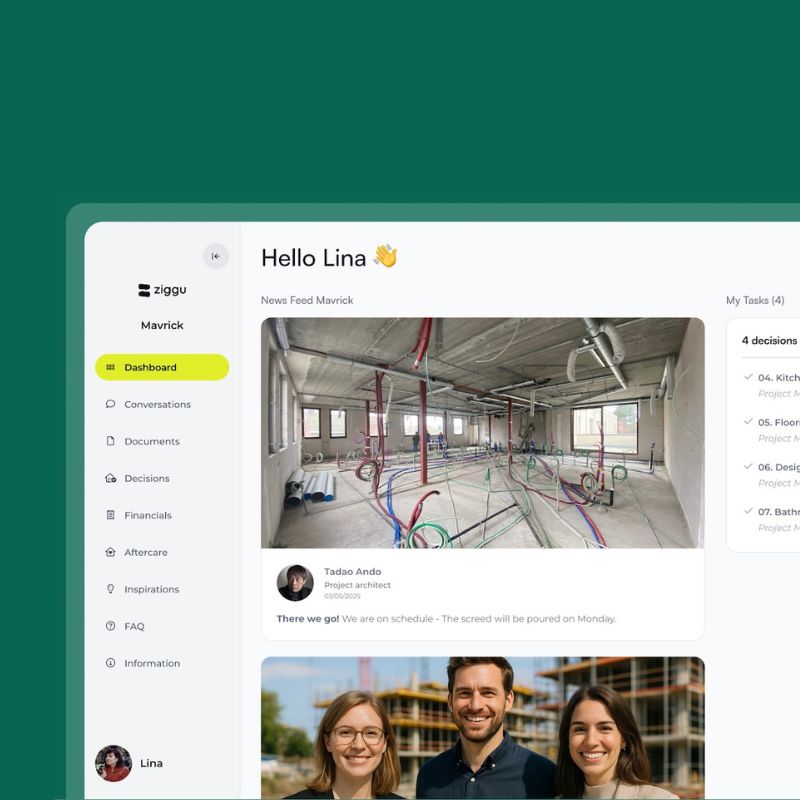
Great digital experiences start with centralized platforms. These systems organize every document and information piece you share with homebuyers. Users can make kitchen or bathroom decisions through user-friendly tools. They can sign contracts or ask questions and organized — goodbye endless email chains! The exciting part involves sharing construction site news updates, cool videos, or sunset photos from their future garden. Homebuyers experience the wow factor of your digital experience. Consider adding blog posts introducing the foreman or contractors. Share architect quotes. These details make tremendous differences for homebuyers.

Successful digital homebuyer experiences require specific platform capabilities. Document management: Centralized access to contracts, plans, specifications, and updates eliminates confusion and email overload. Decision tracking: Clear interfaces for homebuyers to make choices about finishes, fixtures, and customizations with visual confirmation. Progress updates: Regular construction milestones, photos, and timelines keep buyers informed and engaged throughout the building process. Communication tools: Unified messaging systems connect homebuyers directly with project teams, contractors, and customer service.
| Traditional Property Management | Digital Portal Approach |
|---|---|
| Phone calls and email chains | Centralized messaging platform |
| Paper documents and physical meetings | Digital document access 24/7 |
| Periodic verbal updates | Real-time progress tracking with photos |
| Manual decision tracking | Interactive selection tools with confirmations |
| Limited transparency on delays | Automated milestone notifications |
Digital platforms excel at creating transparency that traditional processes cannot match. Homebuyers access real-time information about their project status, upcoming milestones, and any potential delays. This transparency reduces anxiety and builds trust. When buyers understand what's happening and when, they feel more confident in their investment decision. Property developers benefit from reduced customer service calls and fewer misunderstandings about project timelines or specifications. They glimpse behind the scenes while you create stories that let them dream about their future home instead of worrying about unknown progress.
Property developers embracing digital homebuyer experiences gain significant competitive advantages. Modern buyers actively seek developers who offer transparent, digital-enabled processes. Companies providing comprehensive digital experiences differentiate themselves in crowded markets. They attract tech-savvy buyers while building stronger customer relationships. The data supports this shift: three-quarters of homebuyers prefer companies using digital tools during the buying process. Ignoring this preference means losing potential customers to competitors who embrace digital shift. Satisfied customers recommend you to friends and family more often, creating win-win scenarios where homebuyers feel happy with both their home and the entire experience.
Digital expectations will continue evolving. Property developers implementing solid digital platforms now position themselves for future customer demands. The companies succeeding tomorrow are building digital capabilities today. They understand that exceptional homebuyer experiences require both beautiful properties and seamless digital journeys. Modern homebuyers don't just want great homes — they demand great experiences getting there. Digital platforms deliver both while creating lasting customer relationships that drive referrals and repeat business. For developers managing multiple projects simultaneously, learning efficient large scale project management strategies becomes essential. The choice is clear: embrace digital homebuyer experiences or watch competitors capture the customers who increasingly expect them. The 75% of buyers seeking digital-enabled processes won't wait for reluctant developers to catch up.
According to the 2021 National Real Estate and Consumer Trend Report, 75% of homebuyers would likely consider buying a home with a company that uses digital tools during the buying process. This preference spans across generations, with 83% of millennials, 70% of Gen X, and 61% of baby boomers showing interest in digital solutions.
Digital platforms provide real-time access to project status, construction milestones, and potential delays. Homebuyers can view progress photos, track decisions, and receive automated updates, which reduces anxiety and builds trust throughout the development process.
Essential features include centralized document management, decision tracking interfaces, real-time progress updates with photos, and unified communication tools. These capabilities eliminate email overload and create transparent communication channels between buyers and development teams.
Property developers experience reduced customer service calls, fewer misunderstandings about timelines, and improved customer satisfaction. Digital platforms also help developers differentiate themselves in competitive markets and generate more referrals from satisfied customers.
No, digital expectations represent a permanent shift in consumer behavior across all generations. The pandemic accelerated adoption of digital tools, but these preferences have become the new standard for customer satisfaction in real estate transactions.
Developers using comprehensive digital platforms attract tech-savvy buyers, build stronger customer relationships, and differentiate themselves from competitors. They also position themselves better for future customer demands as digital expectations continue evolving.
Digital platforms centralize all communication through unified messaging systems, share construction site photos and videos, and provide regular milestone updates. This approach replaces endless email chains with organized, accessible information that keeps buyers engaged throughout the building process.
Vincent is co-founder of Ziggu, the project management software for client work, where he leads sales and marketing. Ziggu gives project-based businesses - property developers, architects, creative agencies, manufacturers and more - one place to run long, milestone-driven projects with clients and partners in the loop: milestones, tasks, decisions and approvals, and project conversations in a single dossier, paired with a client portal. With a background in architecture, project management and SaaS, Vincent writes about client experience, project delivery, and the future of project-based collaboration.