Key Takeaway
Project companies that treat clients like honored guests, not transactions, create experiences people remember and talk about. Exceptional service is now the baseline. What sets companies apart is going unreasonably far with personal touches that clients never expect but always remember.
Good Service Is the Baseline. Now What?
Picture this: you walk into a restaurant and feel like the main character in your own movie. It is not just about what is on your plate. It is about how deeply seen and cared for you feel.
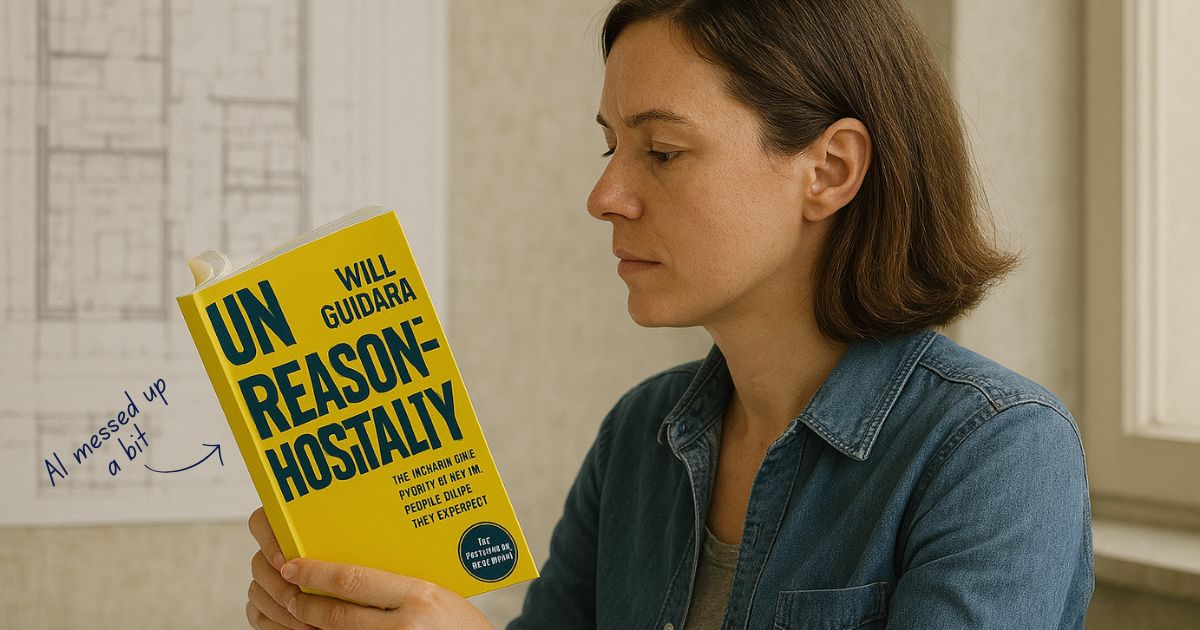
That's the core message in Unreasonable Hospitality, the book by Will Guidara, former GM of New York's Eleven Madison Park (once named the best restaurant in the world). At a Michelin-starred restaurant, exceptional food is the baseline. What set Eleven Madison Park apart wasn't just what was on the plate, but what happened around it.
Their success was built on better humanity.
You don't have to be in fine dining to apply this. Whether you're designing homes, overseeing construction, or guiding buyers through a multi-year project, the takeaway is the same:
Clients don't remember what you did. They remember how you made them feel.
One of the most iconic stories in the book? When a guest at Eleven Madison Park casually mentioned they hadn't had time to try a real New York hot dog, the team ran out to get one from a street cart and served it on a silver platter.
What do you think those guests remembered most and told their friends about for years afterward?
Great Service Isn't Remarkable Anymore. It's Expected
In real estate, construction, and architecture, we often hear:
- "We're known for solid customer service."
- "We send regular updates."
- "We try to answer within 24 hours."
Awesome. But that's the bare minimum in today's market.
Clients don't write rave reviews because "you answered quickly". They do it when you surprise them with something they didn't expect, but will never forget.
That's what unreasonable means.
The contractor who texts a heads-up before a showroom visit, not because it's their job, but because it helps. The developer who remembers a client is about to become a parent and sends a small note. The architect who shows up to an early site visit with fresh croissants and coffee, because their client is a young parent who barely sleeps.
These aren't grand gestures. But they are personal.
And in a world full of AI, chatbots and automated emails, that hits differently. It is the same reason keeping homebuyers informed during the quiet months does more for a relationship than any contract clause.
Where traditional client communication sends standard updates by email, reacts to problems, keeps a professional distance and stops at what the contract says, the hospitality version sends personal photo updates with context, anticipates needs before the client asks, builds a warm connection and goes past what was promised.
The Project Hospitality Matrix: A Framework for Excellence and Implementation
Here's how project hospitality translates into actionable steps:
Level 1: Expected Service
- Regular project updates
- Timely responses to questions
- Professional communication
Level 2: Proactive Excellence
- Anticipating client needs before they ask
- Solving problems before they become issues
- Going beyond contractual obligations
Level 3: Unreasonable Hospitality
- Personal touches that show you listen
- Memorable moments that clients share with others
- Human connections that last beyond project completion
Another anecdote from the book? A guest once stained his tie before an important meeting. The team replaced it overnight, no questions asked.
It wasn't just thoughtful. It solved a problem before it became one. And they didn't have to do it.
Implementation Checklist: How to Implement Unreasonable Hospitality
Before Each Client Meeting
- Research something personal about your client (recent life events, interests)
- Prepare thoughtful questions beyond the project scope
- Bring something unexpected but relevant (coffee, pastries, or useful resources)
During Project Execution
- Send photo updates even when not requested
- Remember and ask about important dates in their lives
- Anticipate questions and provide answers before they're asked
Beyond Project Completion
- Check in months after handover
- Send resources for home maintenance or design inspiration
- Remember anniversaries of move-in dates
Crisis Management
- Address issues immediately with transparency
- Offer solutions plus something extra to restore confidence
- Follow up personally, not just through automated systems
Hospitality Is a Business Strategy for Project Companies
Your client might be investing tens or hundreds of thousands into their project with you. They're excited, overwhelmed, and probably Googling "how not to mess up a new build" at 11 PM.
So when they turn to you, they're not just looking for answers. They're looking for reassurance.
If you treat them like honored guests instead of transactions, you'll do more than meet expectations. You'll build trust that lasts far beyond handover day.
Because let's be real:
People might forget your name. But they'll never forget how you made them feel during a stressful chapter of their life.
None of this replaces the tooling. A client portal is what keeps the updates, documents and decisions in one place, so the time you save on chasing information is time you can spend on the moments that actually land.
They'll Remember the Human, Not the Blueprint
At Ziggu, we believe technology can supercharge your client relationships. But it's still the human moments, the ones that don't scale, that stick.
Unreasonable Hospitality is a reminder that the companies who stand out are the ones who go just a little too far. Not because they have to, but because they care.
And maybe the question we should all ask more often is:
"What would I love, if I were the client?"
Maybe milk and cookies.
Final anecdote from the book: when Will Guidara noticed a family celebrating a child's birthday at the restaurant, he asked what dessert the child would really want. The answer? Milk and cookies. The team didn't flinch. They baked them from scratch, because it's not about what's on the menu. It's about what matters in the moment.
In project-based businesses, your "menu" might be blueprints, timelines, and specifications. But what your clients want is to feel heard, understood, and cared for during one of the most significant investments of their lives.
The companies that understand this, that treat every client interaction as an opportunity to create something memorable, don't just complete projects. They create advocates.