Updated:
August 12, 2026
Fixing Your Construction Project Bottleneck
Construction project bottlenecks drain budgets and morale through fragmented communication and unclear approval processes, requiring centralized coordination to prevent delays.

Construction project bottlenecks drain budgets and morale through fragmented communication and unclear approval processes, requiring centralized coordination to prevent delays.


Construction project bottlenecks don't just slow progress—they drain budgets and destroy team morale. Most architects and project managers unknowingly create these delays through fragmented email chains and unclear approval processes. The solution lies in centralizing communication and structuring decision flows before small delays become major setbacks.
In construction projects, delays aren't just inconveniences—they cascade into financial losses, rework, and damaged relationships. Architects and project managers coordinate communication and approvals, but this central role can quickly transform from asset to liability. The bottleneck problem starts small but grows exponentially. A delayed quote approval becomes a missed delivery window. A lost email thread becomes incorrect work that needs tearing out.
Relying on email fragments project information across dozens of individual inboxes. Important updates get buried under routine correspondence. Only those copied on specific emails stay informed. What happens when someone's out of office? When a crucial message gets forgotten in a forwarding chain? These silos create information gaps that disrupt entire workflows. Karolien Verschueren from BAU experienced this firsthand: "With a growing team and more projects, using email became unsustainable. Ziggu brought structure and helped us work more efficiently, without errors or lost information."
Consider this typical scenario: A customer requests bathroom layout changes. The showroom needs notification to prepare a new quote. That quote requires customer approval before the architect updates plans and the contractor receives changes. Without coordination, teams build the wrong version. Rework follows. Costs multiply. Judith Wauman from Bauwsteen highlights the stakes: "In construction, hundreds of emails are sent. The risk is that I only forward quotes months later, and by then, certain jobs have already been completed, leading to rework, extra costs, and wasted time."
| Traditional Email Approach | Centralized Communication |
|---|---|
| Information scattered across multiple inboxes | All project data housed in one platform |
| Manual forwarding and follow-ups required | Automatic notifications and workflow triggers |
| Lost context from email chains | Complete audit trail and project history |
| Delayed approvals causing rework | Structured approval flows preventing errors |
Without centralized systems, tracking responsibility becomes impossible. "Who's handling this update?" "Was this already approved?" These questions shouldn't exist on well-managed projects. Teams need real-time visibility without notification overload. The balance between transparency and focused attention determines project flow efficiency. Visibility gaps create accountability confusion that spreads across entire project teams, making simple decisions take days instead of hours.
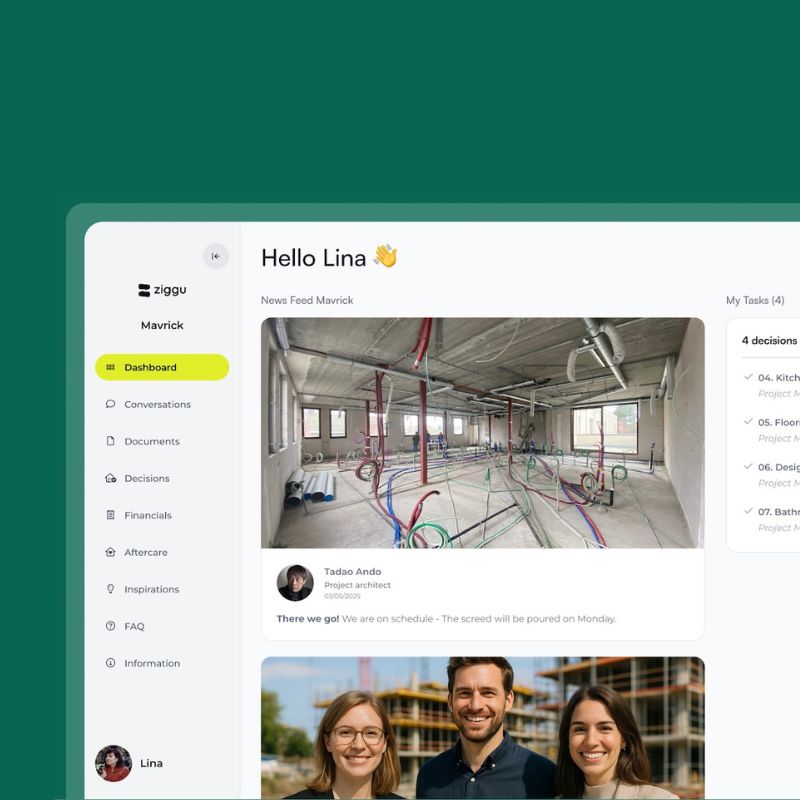
Breaking construction project bottlenecks requires both better tools and smarter processes. The goal isn't adding more complexity—it's creating clarity through structure. Ziggu eliminates information silos by housing all communication and project data in one platform. Change requests, quotes, plan updates—everyone involved accesses the latest information without hunting through email chains. This centralization prevents the "I didn't see that email" problem that derails so many projects. When information lives in one place, it stays accessible regardless of individual inbox management habits.
The efficiency gain becomes immediately apparent. Teams spend time executing work instead of searching for information or recreating lost context from scattered conversations. Ziggu's platform shows team members only relevant information. Contractors don't see design revisions until final approval. Project managers track progress across all tasks without micromanaging individual steps. This filtered visibility maintains accountability while preventing notification fatigue. People stay informed about decisions that affect their work without drowning in irrelevant updates. For construction companies managing large-scale projects efficiently, this structured communication becomes especially critical.
Return to the bathroom layout example. With structured workflows, the process becomes seamless: Customer requests change → Showroom receives automatic notification → Quote generated and sent for approval → Architect receives approval notification → Plans updated → Contractor receives final changes. Each step triggers the next automatically. No manual forwarding. No missed handoffs. No building the wrong version because someone didn't get the memo. Judith Wauman confirms this transformation: "With Ziggu, we can share and follow up on quotes directly, significantly reducing delays that used to cause issues in the past."
This structured approach prevents costly errors while accelerating project timelines. Teams know exactly what happens next and when it should happen. Manual reminder sending and approval tracking consume hours better spent on actual construction work. Ziggu automates these administrative burdens while logging every notification and task update. No more digging through email threads to determine next steps. The system maintains a clear audit trail while moving projects forward automatically. This automation doesn't replace human judgment—it eliminates the busy work that prevents teams from applying that judgment effectively.
Ziggu addresses construction's unique communication challenges through purpose-built solutions. Unlike generic project management tools, it understands the specific workflows that make or break building projects. The platform helps architects and project managers avoid delays from lost emails and manual processes, save money by eliminating rework and late-stage changes, and build trust through transparency and timely communication. These benefits compound over time. Each prevented miscommunication avoids future complications. Each streamlined approval process builds momentum for the entire project team.
Moving from email-based workflows to structured communication requires specific organizational readiness. Teams need commitment to new processes and willingness to abandon familiar but inefficient habits. Key prerequisites include leadership buy-in from project stakeholders who will enforce new communication standards, team training to ensure everyone understands the new workflows, and data migration planning to transfer existing project information into the centralized system. The transition period requires patience as teams adapt to structured processes. However, the efficiency gains typically appear within the first project cycle. This transition becomes easier when companies recognize that stopping the middleman role between homebuyers and suppliers creates value for all parties involved.
Before implementing centralized communication systems, construction teams must establish several foundational elements. Leadership commitment ensures consistent adoption across all project stakeholders. Team members require training on new workflows to maintain productivity during the transition. Data security protocols protect sensitive project information when moving from email to cloud-based platforms. Integration planning addresses how the new system connects with existing tools like CAD software and accounting systems. Change management strategies help overcome resistance from team members comfortable with email-based processes.
Your role as architect or project manager remains critical to project success—but it doesn't have to create delays and inefficiencies. Ziggu empowers teams to communicate, manage approvals efficiently, and avoid costly mistakes. Centralizing information and structuring workflows ensures every stakeholder has necessary information when they need it. No more hunting through email chains or recreating lost context from fragmented conversations. Modern construction projects require serious attention to customer experience, which becomes impossible when communication breaks down.
The construction industry moves fast enough without artificial delays from poor communication systems. Teams that remove these bottlenecks deliver projects on time, under budget, and with fewer headaches for everyone involved. Don't let information silos and approval delays slow your projects down. Transform your workflows from liability into competitive advantage.
Fragmented email communication and unclear approval processes create the majority of construction bottlenecks. When project information gets scattered across individual inboxes, teams lose visibility and accountability becomes impossible to track.
Email workflows create information silos where important updates get buried under routine correspondence. When someone's out of office or a message gets forgotten in forwarding chains, entire workflows get disrupted and teams build incorrect versions.
Centralized platforms house all project data in one accessible location, preventing the "I didn't see that email" problem. Teams access current information without hunting through email chains or recreating lost context from scattered conversations.
Efficiency gains typically appear within the first project cycle after implementation. Teams spend less time searching for information and more time executing actual construction work.
Success requires leadership buy-in from project stakeholders, team training on new workflows, and data migration planning. Teams must commit to new processes and abandon familiar but inefficient email habits.
Yes, automated approval flows and centralized information prevent teams from building wrong versions due to miscommunication. Each step triggers the next automatically, eliminating missed handoffs that lead to costly errors.
Ziggu addresses construction's unique communication challenges through purpose-built solutions. It understands the specific workflows that make or break building projects, unlike generic tools that require extensive customization.
Vincent is co-founder of Ziggu, the project management software for client work, where he leads sales and marketing. Ziggu gives project-based businesses - property developers, architects, creative agencies, manufacturers and more - one place to run long, milestone-driven projects with clients and partners in the loop: milestones, tasks, decisions and approvals, and project conversations in a single dossier, paired with a client portal. With a background in architecture, project management and SaaS, Vincent writes about client experience, project delivery, and the future of project-based collaboration.