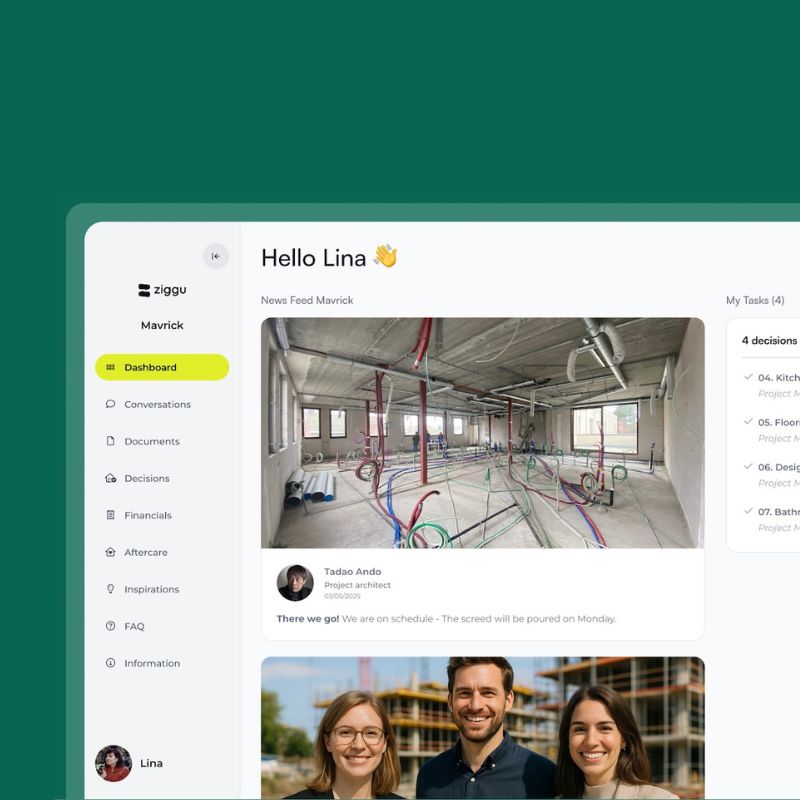
Add Multiple Customers Per Unit - New Ziggu Feature Update
Ziggu removes its 2-customer limit per unit, now allowing unlimited users to enable multi-generational families and professional teams to collaborate seamlessly on property development projects.
Follow us for more content
Ziggu now supports unlimited customers per unit, eliminating the previous 2-user restriction that limited family involvement and professional collaboration in property development projects. This update enables multi-generational participation, shared decision-making, and seamless integration of external professionals like interior designers into the buying process.
Property developers and their clients have been asking for this feature since day one. The old limit created artificial barriers.
Now you can assign virtually unlimited homebuyers, tenants, investors, or professionals to a single unit. No more choosing who gets access.
Why Multiple Customers Per Unit Matters
Real estate transactions involve entire families, not just primary buyers. Parents and children need equal access to project information.
The previous 2-user limit forced difficult decisions. Who gets portal access? Who handles all communication alone?
Modern property development demands collaboration between buyers, family members, and professionals. This update removes those artificial constraints and improves customer experience for residential developers by ensuring all stakeholders feel included in the process.
Real-World Collaboration Scenarios
Multi-generational purchases are increasingly common. Both parents and their adult children want involvement in major investment decisions.
Service flat purchases often involve children managing online communication for elderly parents. Shared access eliminates bottlenecks.
High-end purchases frequently include interior designers, architects, or other professionals. Everyone needs project access without sacrificing buyer profiles.
Traditional Email Communication
Ziggu Multiple Customer Portal
Maximum 2 users per unit
Unlimited users per unit
Forwarding emails between family members
Real-time shared access for all stakeholders
Delayed decision-making process
Simultaneous notifications and approvals
Risk of miscommunication
Unified communication threads
Excluded family members or professionals
Complete team involvement from day one
How the Multiple Customer Feature Works
The user interface remains identical to what you know. Adding multiple customers follows the same workflow.
Navigate to your unit in the project overview. Click "Add Customer" as many times as needed.
Each customer gets their own profile with customizable access permissions. You control what each person sees.
Managing Customer Access and Permissions
When you add customers to a unit, they automatically gain access to relevant Documents, Conversations, and Decisions & Approvals.
Group conversations become natural. All parties see the same communication thread in real-time.
The unified inbox consolidates messages from all stakeholders. No more forwarding emails between family members.
Communication and Project Management Benefits
Conversations automatically include all customers attached to the unit. Click the dropdown arrow to see everyone involved.
Decisions & Approvals show complete stakeholder overviews. Click "more" to access all user profiles attached to the unit.
Notifications reach everyone simultaneously. No delays in critical communication.
Multiple customers per unit reduces administrative overhead for developers. Less time spent forwarding information or managing separate communication channels. This approach helps developers manage large-scale projects more efficiently by centralizing all stakeholder communication.
Decision approval processes accelerate when all stakeholders have direct access. No delays waiting for information to reach the right person.
Customer satisfaction increases when everyone feels included in the process. Families appreciate transparent, inclusive communication.
Before vs After Comparison
Previously: Two customers maximum per unit, forcing difficult access decisions and communication bottlenecks.
Now: Unlimited customers per unit, enabling complete family and professional team involvement.
The change eliminates the need for informal workarounds like shared login credentials or endless email forwarding.
Use Cases for Multiple Customers
Family purchases benefit most from unlimited user access. Parents can stay informed while children manage digital communication.
Investment properties often involve multiple stakeholders. Business partners, family trusts, and financial advisors all need project visibility.
Luxury developments frequently include design professionals. Interior designers, landscape architects, and consultants integrate smoothly.
Multi-Generational Property Investments
Elderly parents purchasing service flats often rely on adult children for online communication. Both generations need equal access to project information.
Young families buying their first home frequently involve parents or grandparents in major decisions. Everyone can participate directly.
Inheritance properties require multiple family member involvement from day one. Shared access prevents confusion and missed information.
Professional Integration Benefits
High-end property purchases increasingly involve external professionals. Interior designers need access to floor plans, technical specifications, and milestone updates.
Real estate agents representing buyers can maintain involvement throughout the development process. They access relevant information without compromising buyer privacy.
Legal representatives and financial advisors stay informed about project progress and decision deadlines.
Getting Started with Multiple Customers
Existing projects automatically support the new feature. No migration or setup required.
Add customers using the familiar interface in your project overview. Each new customer receives portal access immediately.
Customize permissions for each stakeholder. Control what information each person sees and which actions they can perform.
Implementation Best Practices
Start by identifying all stakeholders who need project access. Include family members, professionals, and advisors.
Set clear communication expectations with your customers. Explain who has access and how information flows.
Use the FAQ Builder feature to address common questions about multiple user access. Reduce support inquiries proactively.
Monitor group conversations to ensure productive collaboration. Intervene when discussions need professional guidance.
Developer Benefits
Streamlined communication reduces support tickets. Customers find answers independently instead of calling for basic information.
Faster decision cycles improve project timelines. All stakeholders see the same information simultaneously.
Enhanced customer experience leads to positive referrals. Satisfied families recommend developments to their network. This digital approach demonstrates how a customer portal has become the new website for property developers seeking to engage multiple stakeholders effectively.
The Future of Collaborative Property Development
This update represents Ziggu's commitment to real-world property development needs. We listen to client feedback and implement features that matter.
Property development increasingly involves complex stakeholder networks. Our platform evolves to support these collaborative relationships.
More features addressing multi-party collaboration are in development. The unlimited customers update is just the beginning.
The property development industry demands tools that match the complexity of modern transactions. Multiple customers per unit eliminates artificial barriers that slowed collaboration and frustrated families. Now everyone who needs access gets access—no more choosing between stakeholders or managing workarounds. This feature reflects how property development actually works: as a collaborative process involving families, professionals, and advisors working together toward successful project completion.
Written by Vincent Van Impe
Vincent is co-founder of Ziggu, the project management software for client work, where he leads sales and marketing. Ziggu gives project-based businesses - property developers, architects, creative agencies, manufacturers and more - one place to run long, milestone-driven projects with clients and partners in the loop: milestones, tasks, decisions and approvals, and project conversations in a single dossier, paired with a client portal. With a background in architecture, project management and SaaS, Vincent writes about client experience, project delivery, and the future of project-based collaboration.


.gif)
.gif)
.gif)