Why Every Architect Needs a Professional Client Portal
Client portals streamline architectural workflows by centralizing communication, automating document management, and providing real-time project visibility to boost efficiency and client satisfaction.
Follow us for more content
Client portals transform how architects work by centralizing communication, automating document management, and providing real-time project visibility. These digital platforms eliminate email chaos, reduce administrative overhead, and create transparent workflows that boost both efficiency and client satisfaction.
Quick Summary: 3 Ways Client Portals Save Architects Time
Centralized document storage eliminates version control issues
Real-time project tracking reduces status update meetings
Communication and Document Management Revolution for Architects
Architects face a communication nightmare. Their inboxes overflow with messages from clients, contractors, government agencies, and spam. Everything lands in one chaotic stream. Finding that crucial permit approval from three weeks ago becomes a 20-minute archaeological dig through hundreds of emails.
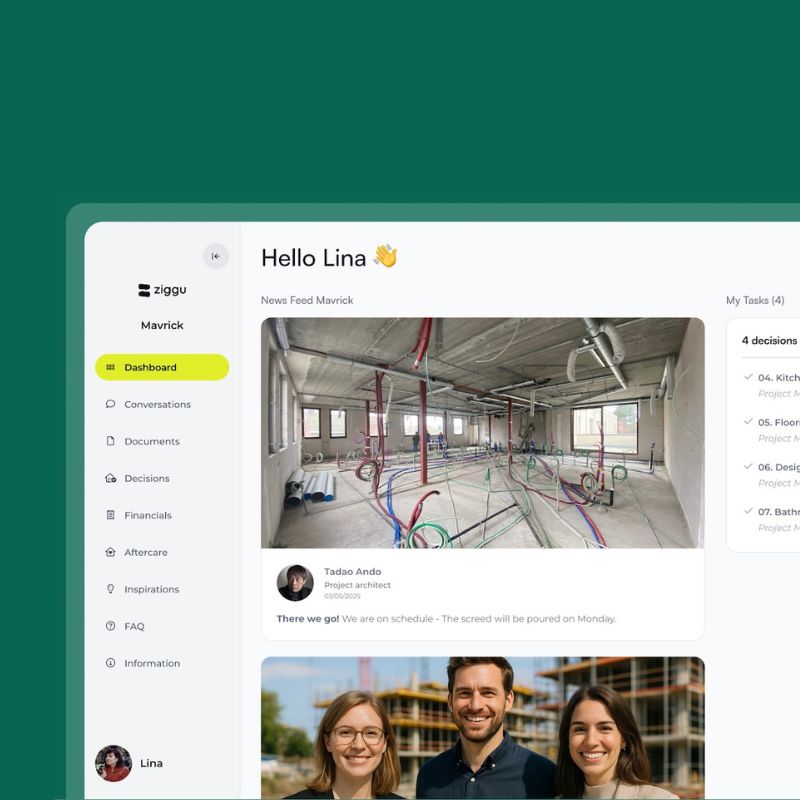
A client portal creates separate communication channels for each project. Ziggu's platform automatically filters messages by project and participant. Only relevant stakeholders appear in each project thread.
Ziggu automatically sorts messages by project and topic
This separation transforms chaos into clarity. Each conversation has context. Every message belongs to its proper project timeline.
Building projects generate thousands of documents. Blueprints, technical drawings, contracts, permits, change orders, material specifications. Traditional file sharing creates version control disasters. Contractors arrive on-site with outdated plans. Structural engineers reference superseded specifications.
These mistakes cost money and time. They erode client confidence. A client portal becomes the single source of truth. All project documents live in one organized location. Version control happens automatically — everyone accesses the latest approved files.
Traditional Email Management
Client Portal System
Mixed project communications in single inbox
Project-specific communication channels
Manual document version tracking
Automatic version control and notifications
Frequent status update calls and meetings
Real-time progress visibility for all stakeholders
Repetitive information requests
Self-service FAQ and document access
When the structural engineer uploads revised beam calculations, the contractor gets notified immediately. No more working from obsolete drawings.
Real-Time Project Tracking and Self-Service Support
Clients call constantly asking "How's my project progressing?" These interruptions fragment deep work sessions. A client portal answers these questions before they're asked. Project milestones appear in a visual timeline. Task completion updates automatically.
Clients log in whenever curiosity strikes. They see current status, upcoming deadlines, and completed phases without bothering the architect. This transparency reduces phone calls and status meetings. Architects regain focused work time for design and problem-solving.
Simple questions consume surprising amounts of time. "Where do I find the electrical plans?" "When is the next site visit?" "Who handles permit applications?" A FAQ builder addresses these repetitive inquiries. Clients find answers independently through searchable help sections and project timelines.
This self-service capability redirects architect energy toward value-creating activities than information retrieval. Similar to how customer portals are becoming the new website, these platforms create a central hub for all project-related interactions.
Mobile Site Reports and Financial Transparency
Traditional site reporting happens in two stages. First, handwritten notes during the site visit. Second, typing formal reports back at the office. This double-handling wastes time and introduces errors.
Mobile client portals enable real-time reporting. Architects photograph issues, add notes, and assign responsible parties while standing on-site.
Clients see the current status of each item on the site report
Clients receive instant notifications about progress and issues. They can add comments or approvals immediately, accelerating decision-making.
Budget discussions create tension. Clients worry about cost overruns. Architects struggle to communicate value. Financial transparency through client portals changes this dynamic. Clients see budget breakdowns, change order justifications, and payment schedules in real-time.
When costs change, the reasoning appears immediately with supporting documentation. This openness prevents budget surprises and builds trust, which is essential for maintaining positive client relationships in the construction industry.
BIM Integration and Implementation Strategy
Architects work in specialized software like Revit, ArchiCAD, and AutoCAD. Switching between design tools and communication platforms creates friction. Modern client portals integrate with these professional BIM tools through REST APIs. Design updates sync automatically from BIM software to the client portal.
This integration eliminates manual file uploads and ensures clients always see current design iterations. The workflow becomes seamless between technical design work and client communication, similar to the efficient project management strategies used in large-scale developments.
Successful portal implementation follows a structured approach. Phase 1 involves setup and configuration: defining project templates for different building types, creating standard milestone frameworks, building FAQ libraries for common client questions, and setting up automated notification preferences.
Phase 2 focuses on team training: training staff on mobile reporting workflows, establishing document naming conventions, practicing client onboarding procedures, and testing integration with existing CAD software.
Phase 3 handles client rollout: starting with one pilot project, gathering feedback from early adopters, refining processes based on real usage, and expanding to all active projects.
ROI Analysis and Future Technology Trends
Client portals require subscription investment. However, efficiency gains justify these costs quickly. Architects report managing more projects with existing staff. Reduced email management, faster document sharing, and fewer status meetings create capacity for additional revenue.
Beyond financial returns, portals improve work-life balance. Less administrative overhead means more time for creative design work and strategic thinking. The return on investment becomes evident within the first few months of implementation.
Client portal technology continues evolving. Artificial intelligence now identifies potential project delays by analyzing communication patterns and milestone progress. Smart notifications alert architects when client response times lag or when document approvals create bottlenecks. This predictive capability prevents small issues from becoming major delays.
Integration with IoT sensors on construction sites provides real-time environmental data and progress photography, further reducing manual reporting requirements. These technological advances mirror broader trends in construction project management and customer experience enhancement across the industry.
Frequently Asked Questions About Client Portals for Architects
How long does portal implementation take?
Most architectural firms complete setup within 2-3 weeks. This includes system configuration, team training, and pilot project launch.
Do clients actually use these portals?
Adoption rates exceed expectations when portals provide genuine value. Clients appreciate 24/7 access to project information and reduced email volume.
How do portals integrate with existing project management software?
Modern platforms offer REST APIs for seamless integration with tools like Procore, PlanGrid, and Microsoft Project. Data synchronizes automatically between systems.
What happens if clients prefer traditional communication?
Hybrid approaches work well. Portals can send email notifications for all activities, allowing traditional users to participate without logging in while maintaining centralized project records.
How secure are cloud-based client portals?
Professional platforms maintain enterprise-grade security with encrypted data transmission, regular backups, and compliance with industry standards like GDPR and SOC 2.
Client Portals as Essential Infrastructure for Modern Architectural Practice
Client portals have moved beyond nice-to-have tools. They're essential infrastructure for modern architectural practice. The benefits compound over time. Better communication creates stronger client relationships. Efficient workflows enable higher project capacity. Transparency builds trust that generates referrals.
Architects who embrace these platforms gain competitive advantages in efficiency, client satisfaction, and business growth. Those who resist face increasing administrative burden and client communication challenges.
The question isn't whether to implement a client portal — it's how quickly you can deploy one effectively for your practice. The technology has matured to the point where implementation risks are minimal compared to the competitive disadvantages of maintaining outdated communication workflows.
Written by Vincent Van Impe
Vincent is co-founder of Ziggu, the project management software for client work, where he leads sales and marketing. Ziggu gives project-based businesses - property developers, architects, creative agencies, manufacturers and more - one place to run long, milestone-driven projects with clients and partners in the loop: milestones, tasks, decisions and approvals, and project conversations in a single dossier, paired with a client portal. With a background in architecture, project management and SaaS, Vincent writes about client experience, project delivery, and the future of project-based collaboration.