Customer service process optimization in property development uses automation to eliminate repetitive tasks and reduce errors, allowing teams to focus on building valuable client relationships while improving efficiency and ROI.
Follow us for more content
Customer service process optimization transforms property development by automating repetitive tasks, reducing errors, and freeing teams to focus on high-value client relationships. When companies implement smart automation, they see immediate improvements in both employee satisfaction and customer experience. This strategic approach delivers measurable ROI through increased efficiency and stronger client relationships.
Understanding Customer Service Process Optimization
Process optimization in real estate means implementing automation technologies to eliminate manual, repetitive tasks that drain time and increase errors. Instead of manually updating spreadsheets, sending reminder emails, or sharing the same documents repeatedly, smart systems handle these workflows automatically.
This shift allows customer advisors to focus on what matters most: providing personalized support and building lasting relationships with homebuyers. The transformation goes beyond simple efficiency gains — it fundamentally changes how teams deliver service.
Modern property developers face mounting pressure to provide exceptional customer experiences while managing complex projects and tight deadlines. Customer experience has become a critical differentiator in competitive real estate markets, making process optimization essential for business success.
Task
Manual Process
Automated Process
Document Sharing
Email attachments, version confusion
Centralized portal with latest versions
Client Updates
Individual emails, missed communications
Automated notifications and updates
Task Management
Excel sheets, unclear deadlines
Transparent task lists with clear ownership
Complete Guide to Process Optimization Implementation
Identify Time-Consuming Tasks: Map out repetitive activities that consume hours without adding client value
Implement Automation Tools: Deploy client portals and workflow systems to handle routine communications
Train Your Team: Ensure customer advisors understand how technology enhances their role than replacing it
Monitor Results: Track time savings, error reduction, and customer satisfaction improvements
Refine Processes: Continuously improve based on feedback and performance data
Implementing automation for repetitive tasks creates immediate impact. Add up the time spent on manual document sharing, reminder emails, and status updates — the hours are staggering. Customer advisors can redirect this saved time toward high-value activities like personal consultations, detailed project walkthroughs, and proactive problem-solving.
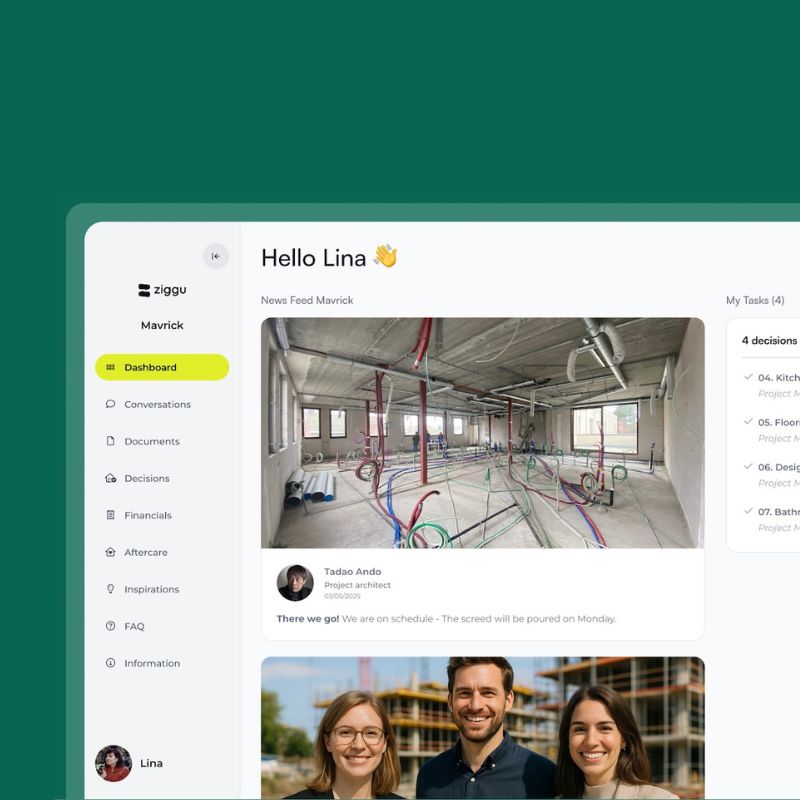
Technology makes the customer advisor role more valuable, not less important. AI handles the mundane tasks while humans excel at empathy, relationship building, and complex problem solving — skills that differentiate your service. Customer portals have evolved into comprehensive communication hubs that serve as the foundation for modern customer service operations.
For large-scale developments, process optimization becomes even more critical. Managing multiple homebuyers, coordinating with suppliers, and maintaining project timelines requires sophisticated automation to prevent communication breakdowns and ensure quality service delivery.
Automating tedious tasks allows employees to showcase their talents and create meaningful impact. When team members feel their work matters, job satisfaction increases dramatically.
Automation also reduces error rates significantly. Missing emails, outdated documents, and unclear task ownership become issues of the past. Teams work more efficiently when technology handles routine tasks and provides clear visibility into project status.
Modern automation tools are designed for user-friendliness. Implementation doesn't require extensive technical training or lengthy adjustment periods. Don't let change management concerns prevent you from capturing these opportunities — the benefits far outweigh the initial adjustment period.
A lot of information gets lost with traditional systems. Now all our documents are in the same spot and are visible for all three parties involved: property developer, subcontractors, and customers.
Elisabeth Ingelaere Customer advisor Volus
As property developer Volus demonstrates, centralized information creates transparency for all stakeholders. Clear expectations and accessible documentation prevent the miscommunications that damage client relationships.
Real-World Impact and Measurable Results
Companies implementing client portal systems report immediate improvements in both operational efficiency and customer satisfaction. Centralized document management eliminates version confusion and ensures all parties access the same information.
Task transparency reduces follow-up calls and clarification emails. Automated notifications keep projects moving without constant manual oversight. Large-scale project management becomes significantly more efficient when teams can focus on strategic coordination than administrative tasks.
Process optimization delivers concrete results through time savings, error reduction, improved efficiency, and revenue growth. The result is a better customer service process optimization that scales with business growth while maintaining high service quality.
Companies that embrace automation today position themselves as market leaders tomorrow. The technology foundation built now supports sustainable growth and competitive advantage in an increasingly demanding marketplace.
Transform Your Customer Service Through Smart Process Optimization
Better customer service through process optimization isn't just possible — it's essential for competitive advantage in today's real estate market.
By automating repetitive tasks, you free your team to deliver the personalized, high-value service that clients expect. Technology becomes an enabler, not a replacement, for human expertise and relationship building.
Start with identifying your most time-consuming manual processes. Then implement targeted automation solutions that preserve the human elements clients value while eliminating inefficiencies that drain resources.
The companies that embrace this approach today will lead their markets tomorrow. Process optimization transforms not just operations but the entire customer experience, creating lasting competitive advantages that drive sustainable growth.
Frequently Asked Questions
What types of tasks should be automated first in customer service?
Start with document sharing, client notifications, and task management workflows that consume significant time without adding direct value. These repetitive activities offer the quickest wins and clearest ROI measurements.
How long does it take to see results from process optimization?
Most companies notice immediate improvements in efficiency within the first few weeks. Customer satisfaction improvements typically become measurable within 2-3 months as teams adapt to new workflows and focus more on relationship building.
Will automation replace customer service jobs?
Process optimization enhances than replaces human roles. Automation handles routine tasks while customer advisors focus on relationship building, complex problem-solving, and personalized service that requires human empathy and expertise.
What are the main challenges during implementation?
Change management and team training represent the primary challenges. However, modern tools are designed for ease of use and require minimal technical training. Clear communication about benefits helps teams embrace new processes.
How do you measure the success of process optimization?
Track key metrics including time savings, error reduction rates, customer satisfaction scores, and employee satisfaction levels. Monitor response times, document accuracy, and client feedback to quantify improvements.
Can small property developers benefit from automation?
Process optimization scales to any business size. Small developers often see proportionally larger benefits because automation frees limited staff to focus on high-value activities that directly impact growth and customer relationships.
What technology skills do teams need for successful implementation?
Modern customer service automation requires minimal technical expertise. Most platforms feature intuitive interfaces designed for business users than technical specialists. Basic computer skills and willingness to learn new workflows are sufficient for most team members.
Written by Vincent Van Impe
Vincent is co-founder of Ziggu, the project management software for client work, where he leads sales and marketing. Ziggu gives project-based businesses - property developers, architects, creative agencies, manufacturers and more - one place to run long, milestone-driven projects with clients and partners in the loop: milestones, tasks, decisions and approvals, and project conversations in a single dossier, paired with a client portal. With a background in architecture, project management and SaaS, Vincent writes about client experience, project delivery, and the future of project-based collaboration.