Better Communication: A WhatsApp Alternative for Architects
Architects can replace WhatsApp with purpose-built client portals that maintain the same speed and accessibility while providing better work-life boundaries and professional structure for construction projects.
Follow us for more content
Yes, architects can successfully move away from WhatsApp by adopting purpose-built client portals that offer the same accessibility and speed without blurring work-life boundaries. The key lies in platforms designed specifically for construction project communication, providing structure and professional separation while maintaining client satisfaction.
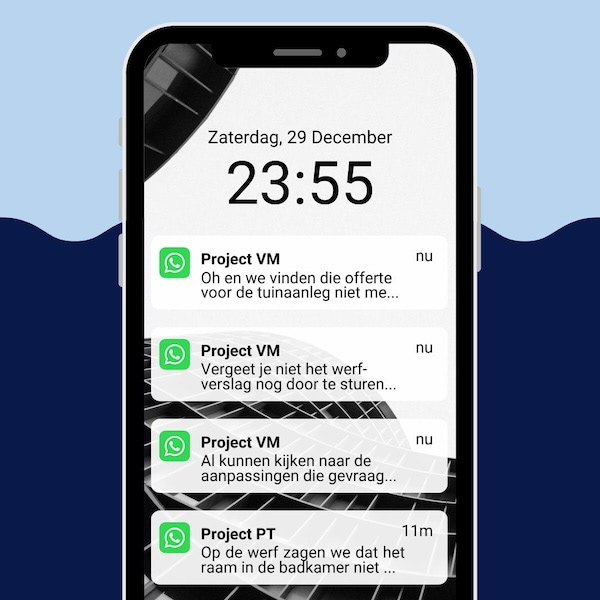
In residential construction, WhatsApp has become the go-to communication tool between architects and clients. The barrier is low: it's fast, intuitive, and always within reach. A question gets asked quickly, and with a photo from the construction site, a client can immediately seek confirmation: "Is this correct?" But this quick and informal way of communicating has its downsides.
WhatsApp: convenient but with pitfalls
For clients, WhatsApp is ideal: questions can be asked at any time of day. But that "always and everywhere" nature creates a different dynamic. While you're watching De Verhulstjes in the evening, a message pops up on your screen. The client sees it's been read and soon expects an answer. Work and private life blur together, and for many architects, this is a source of frustration.
WhatsApp does offer real advantages for architects. An urgent question from a client? You often get faster answers than via email. But when you later need to search for that one message with a specific agreement or comment, it becomes difficult. Chats are long, chaotic, and personal. Your colleagues don't have access to them, so your WhatsApp history is not only inefficient but also not shared or structured.
More than half of architects give feedback that they actually want to move away from WhatsApp as a communication channel with clients. Yet the threshold is high: they fear that switching to an alternative will make their service less personal and accessible. But is this justified?
Top 3 Communication Frustrations
Based on surveys with 140 professionals, these are the main issues:
Work-life boundary erosion — Messages arriving at all hours
Information chaos — Critical decisions lost in endless chat threads
Team isolation — Colleagues can't access project conversations
Professional architect WhatsApp alternative: purpose-built platforms
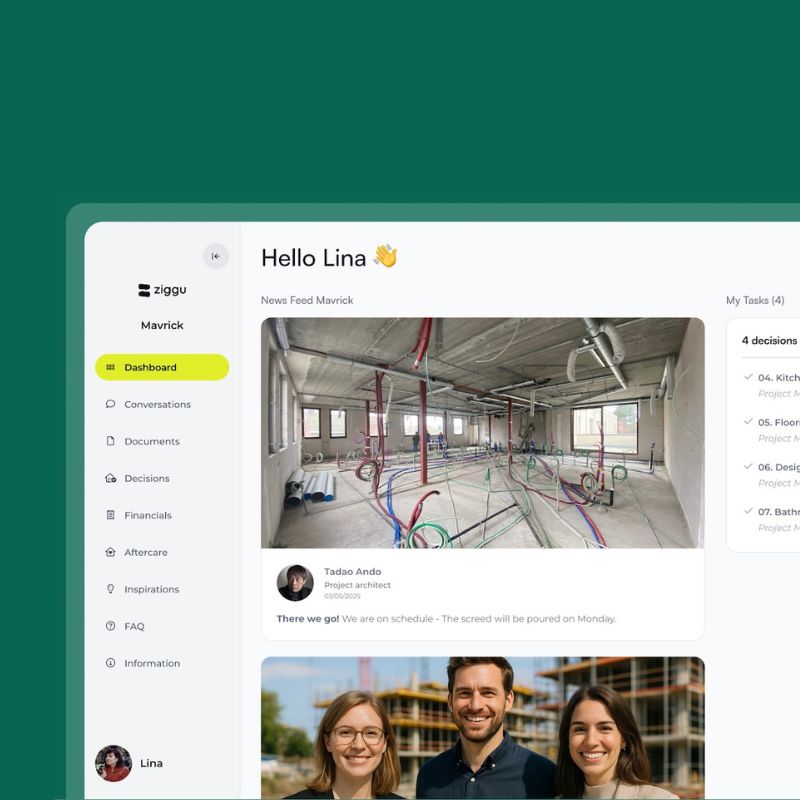
The solution lies in a platform specifically designed for communication in construction projects. Think of a client portal or app where all communication, documents, and steps are bundled. Such a tool offers the advantages of WhatsApp — speed and accessibility — but without the disadvantages.
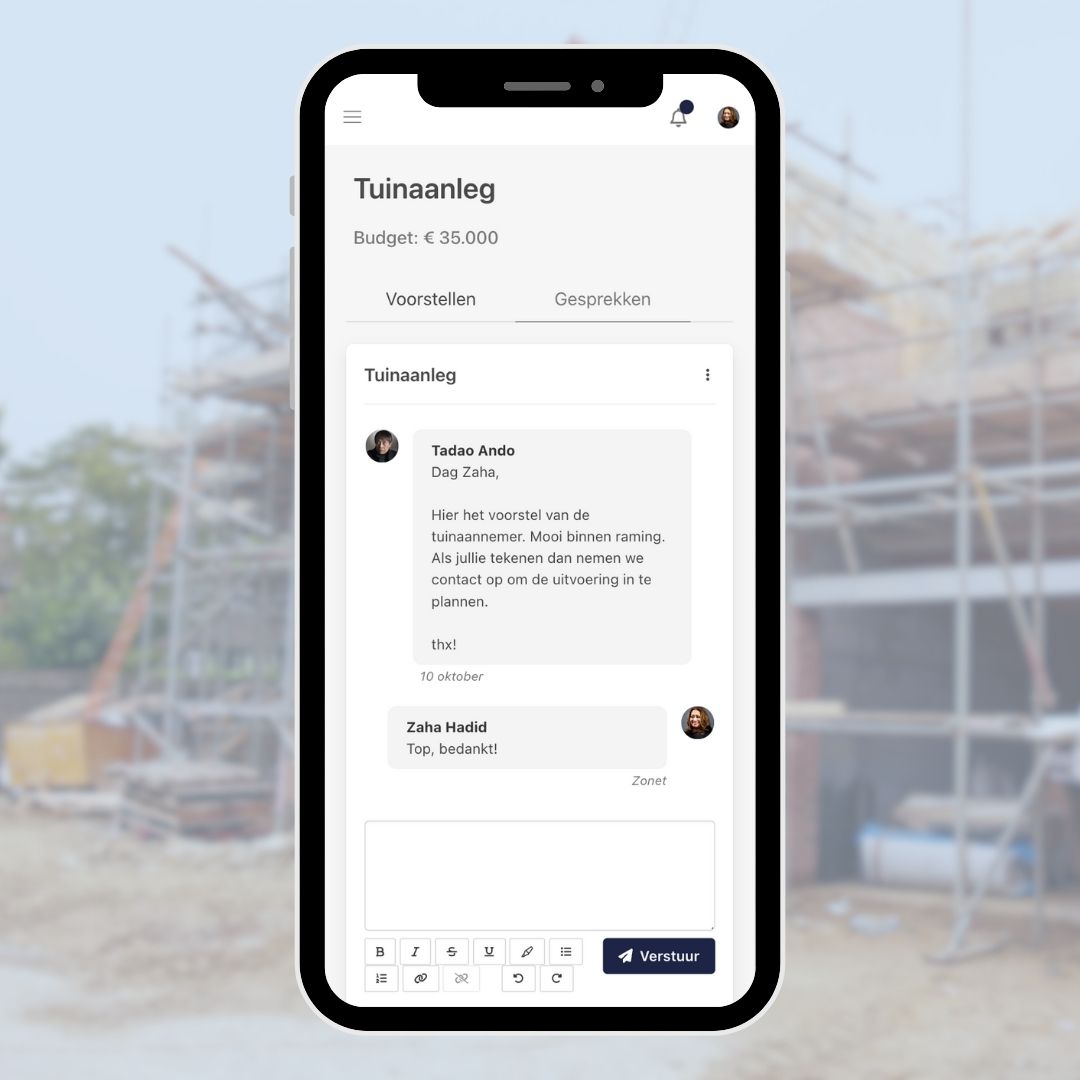
Within Ziggu, for example, you can start a conversation per topic. Say you're discussing the tender for structural work. All messages, comments, and documents are linked to this topic. No more endless searches through a chaotic chat history. Everything you need is directly in the right place.
WhatsApp Communication
Professional Client Portal
Personal phone access
Dedicated platform access
Mixed with personal messages
Project-specific conversations
Limited document sharing
Integrated file management
Individual chat history
Team-accessible discussions
No time boundaries
Professional operating hours
Key Features of Professional Communication Tools
Topic-based conversations — Organized by project phase or decision
Document management — Files linked to relevant discussions
Team access — Colleagues can join conversations smoothly
Professional boundaries — Separate from personal messaging
Example of a chat conversation within Ziggu
Your colleagues also benefit from this. Within a project, they have access to the same context and can easily continue working if you're not available for a moment. The result? Structured collaboration without being dependent on your personal WhatsApp.
As an architect, you finally maintain the separation between work and private life. Clients have access to all necessary information — from documents to progress updates — via the portal. They're less inclined to contact you personally outside work hours because they can often find the answer themselves in the platform. This approach to customer experience creates satisfaction for both parties while maintaining professional boundaries.
Migration strategy and legal compliance considerations
Using WhatsApp for professional communication creates significant legal risks. Personal messaging apps don't meet the data protection standards required for professional architecture projects. Client data, project details, and sensitive construction information shared through WhatsApp may violate GDPR regulations. Professional portals ensure data sovereignty and compliance with European privacy laws. All communications remain within controlled, auditable systems that protect both architect and client interests.
The transition from WhatsApp to professional platforms follows a structured approach. First, set up your portal by choosing a construction-specific platform and configuring it for your practice. Import existing project data and create organized conversation topics. Second, introduce clients to the new system with a brief walkthrough, emphasizing benefits like better organization, faster access to project information, and professional service delivery. Third, phase out WhatsApp over 2-4 weeks while redirecting conversations to the portal and establishing new communication protocols with your team.
For large-scale projects, this migration becomes even more critical as the volume of communications can quickly become unmanageable through personal messaging apps. Professional platforms provide the infrastructure needed to handle complex project requirements while maintaining clear oversight and accountability.
More peace, better service
The switch from WhatsApp to a client portal may require some adjustment, but the advantages are clear: more structure, better collaboration, and a clear distinction between work and private life.
Ziggu proves that it's possible for architects to still provide excellent service to clients without being dependent on personal communication tools like WhatsApp. The result? More peace for you and more satisfaction for your clients.
So, can you as an architect move away from WhatsApp? Absolutely. And perhaps it's a step toward better work-life balance.
Professional communication tools designed for architecture and construction offer the accessibility clients expect while protecting your personal boundaries. The transition represents progress toward more sustainable practice management. As the industry moves toward digital-first client experiences, adopting purpose-built platforms positions your practice for long-term success.
Frequently Asked Questions
Will clients accept moving away from WhatsApp?
Most clients appreciate the professional approach once they experience the benefits. The organized structure and easy access to all project information often provides a better experience than scattered WhatsApp messages. Clear communication about the change helps ensure smooth adoption.
How long does it take to transition from WhatsApp to a professional platform?
The transition typically takes 2-4 weeks for complete adoption. During this period, you gradually redirect conversations to the new platform while maintaining support for clients adjusting to the change. Most practices see full adoption within the first month.
What happens to existing WhatsApp conversations and project history?
Important information from previous WhatsApp conversations can be migrated to the new platform during setup. This ensures continuity of project records while establishing the new communication structure. Key documents and decisions should be transferred to maintain project context.
Is a professional communication platform expensive compared to free WhatsApp?
While WhatsApp appears free, the hidden costs include time lost searching for information, work-life balance issues, and potential legal risks. Professional platforms provide measurable value through improved efficiency and client satisfaction. Most practices find the investment pays for itself through better project management.
Can team members access client conversations in professional platforms?
Yes, this is one of the key advantages over WhatsApp. Team members can access relevant project conversations, ensuring continuity when you're unavailable and improving collaboration. Access controls ensure appropriate team members see relevant discussions while maintaining client privacy.
Do professional platforms work on mobile devices like WhatsApp?
Modern client portal platforms offer mobile apps and responsive web interfaces that work smoothly on smartphones and tablets. Clients can communicate and access project information with the same convenience as WhatsApp, but within a professional framework.
What about GDPR compliance when switching from WhatsApp?
Professional platforms are designed with GDPR compliance in mind, offering better data protection than personal messaging apps. They provide audit trails, data control, and privacy safeguards required for professional communications. This actually reduces legal risk compared to using WhatsApp for business purposes.
Written by Vincent Van Impe
Vincent is co-founder of Ziggu, the project management software for client work, where he leads sales and marketing. Ziggu gives project-based businesses - property developers, architects, creative agencies, manufacturers and more - one place to run long, milestone-driven projects with clients and partners in the loop: milestones, tasks, decisions and approvals, and project conversations in a single dossier, paired with a client portal. With a background in architecture, project management and SaaS, Vincent writes about client experience, project delivery, and the future of project-based collaboration.